How to Apply Bonsai Wire Without Scarring the Bark
Learn how to apply bonsai wire correctly so you can shape branches safely, avoid bark damage, and remove wire before it bites in.
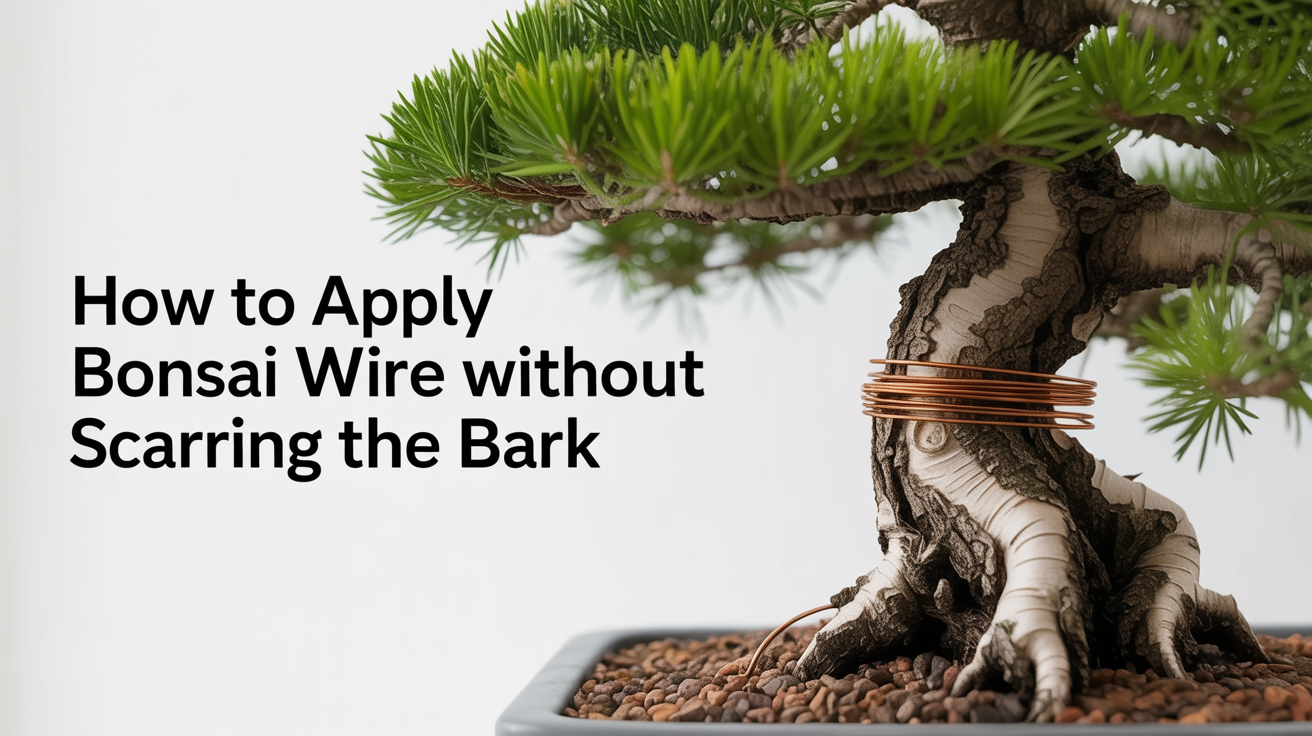
Wiring is one of the most effective tools in bonsai, and also one of the easiest to get wrong as a beginner. The good news: most wire damage is preventable. Once you understand why it happens and what to do instead, you can wire a branch confidently without lying awake worrying about marks.
This guide walks through how to apply bonsai wire step by step, covering the right angle, how to anchor it properly, and what to watch for so the wire comes off before it scars the bark.
Why wire scars happen
Wire scars form when the wire cuts into the bark as the branch grows. Bark is living tissue, and a growing branch expands outward. If the wire is still there when that happens, it gets embedded.
The two main causes:
- Leaving wire on too long. A fast-growing species in active season can scar in a few weeks.
- Wrapping too tight. Wire pressed hard against the bark from the start has no room before it bites in.
A third cause that beginners often miss: wrapping at too steep an angle. We'll cover that below.
Choosing the right wire before you start
The wire you use matters. Aluminium wire is softer, bends easily, and is forgiving on bark. Copper wire is harder, holds its shape better, and is better suited to more mature trees or stubborn branches. For a beginner wiring bonsai without damage in mind, aluminium is the right starting point.
Copper vs aluminium bonsai wire has a full comparison if you want to go deeper, but for most beginner trees, aluminium in a gauge matched to the branch is all you need.
On gauge: the wire should be roughly one-third the thickness of the branch you're bending. Thinner than that and it won't hold the position. Thicker and you risk pressing too hard against the bark. What wire gauge to use on a bonsai covers this in detail.
The right bonsai wiring angle
This is where most beginners go wrong without realising it.
The standard bonsai wiring angle is 45 degrees to the branch axis. Not 90 degrees (that's wrapping around the branch like a spring), and not 20 degrees (so shallow it won't hold and slides when you bend).
At 45 degrees, two things happen. First, the coils distribute the bending force evenly along the branch rather than concentrating it at one spot. Second, as the branch tries to move back after you've bent it, the wire coils grip and resist without digging straight down into the bark.
To picture it: if you hold the branch horizontally and follow the wire with your eye, it should travel at a diagonal, not straight around the circumference. Every time the wire completes one loop, it has moved forward along the branch by roughly the same distance as the diameter of the wire coil.
Too steep (closer to 90 degrees) and the coils sit almost perpendicular to the branch. They don't grip well and can loosen or scar unevenly. Too shallow and you don't get enough mechanical advantage to hold a bend.
How to apply bonsai wire: step by step
Before you start, check that the tree is healthy and not showing any signs of stress. Never wire a tree that's just been repotted or is drought-stressed. Keep your hands clean and dry.
Anchoring bonsai wire correctly
Anchoring is how you stop the wire from spinning or pulling free when you apply pressure. A wire that isn't anchored is dangerous: it can slip and score the bark in one quick movement.
The cleanest anchor for a branch is to wire two branches with one piece of wire. Cut a length roughly one and a half times the combined length of both branches. Start in the middle, loop once around the trunk or a larger branch to anchor the midpoint, then run each end along one of the branches you want to shape. This way the two halves of the wire balance each other and the anchor holds naturally.
For a single branch with no convenient partner, anchor the starting end by wrapping it twice around the nearest large branch or the trunk before proceeding along the branch you're working on.
Wrapping the wire
Hold the wire against the bark lightly, not pressed hard. There should be a small gap, maybe the thickness of a business card, between the wire and the bark. Snug, not tight.
Work from the base toward the tip, keeping that 45-degree angle consistent. Use your other hand to support the branch as you go. Don't let the branch flex or bounce while you're wrapping or you'll lose the angle.
At forks, loop once around the fork before continuing along the next branch. At the tip, trim the wire cleanly with wire cutters so no sharp end sticks out.
Bending the branch
Once the wire is on, bend the branch slowly and steadily with both thumbs on the inside of the bend and your fingers wrapped around the outside. Move in one smooth arc rather than a series of jerks.
You'll feel the branch give slightly. That's the wood fibers adjusting. Stop before you feel any cracking or hear any snapping. A small creak is normal; a crack means you've gone too far and may have split the branch.
Bend to the position you want, then hold it for a few seconds. If the branch springs back a little, that's normal. The wire will hold most of the bend even if it moves slightly after you let go.
Checking the wire regularly
Wiring bonsai without damage doesn't end when you put the wire on. The real work is checking it.
During the growing season, inspect wired branches every one to two weeks. Look for any sign of the wire starting to press into the bark or leave an indentation. The moment you see marks forming, the wire comes off.
Don't wait until the wire has bitten in. By then the damage is done.
Use wire cutters to remove wire, cutting at each coil rather than unwinding. Unwinding a wire from a set branch is surprisingly risky because it flexes the branch in the opposite direction and can snap it. Cut every second coil and lift the pieces away.
A quick reference: what to check before, during, and after
| When | What to check |
|---|---|
| Before wiring | Tree is healthy; branch is supple, not brittle |
| Choosing wire | Gauge is roughly one-third the branch diameter |
| Anchoring | Wire is secured at a fixed point before you begin |
| Wrapping | Angle is 45 degrees; wire is snug but not pressed hard |
| Bending | Slow, steady pressure; stop at first sound of cracking |
| After wiring | Check every 1-2 weeks during growing season |
| Removing | Cut each coil with cutters; don't unwind |
For a broader introduction to the whole process, how to wire a bonsai tree: a beginner's guide covers the full picture including timing by season and which trees respond best to wiring.
Frequently asked questions
How long can I leave wire on a bonsai?
It depends on the species and the time of year. Vigorous growers like junipers or maples in full spring growth can scar within three to six weeks. Slower-growing trees might hold wire safely for a few months. There's no fixed rule, which is why regular checking matters more than any schedule. When you see the bark starting to show lines from the wire, take it off immediately.
What if the wire leaves marks on the bark?
Light marks (the pattern of the wire visible on the bark) usually fade over one to two growing seasons as the bark renews itself. Deep cuts that have embedded into the wood are permanent and will show as spiral scars. This is cosmetically undesirable on a finished tree but doesn't necessarily harm the tree's health unless it's severe enough to girdle and cut off the flow of water and nutrients.
Can I rewire a branch straight away after removing the wire?
Yes, if the branch hasn't fully set in position yet. Wait a week or two before rewiring, and inspect the bark for any soreness or soft spots. Start with fresh wire rather than trying to reuse the old piece.
Is it normal for the bark to look a bit shiny or compressed where the wire was?
Yes. The pressure of the wire can compress the outer bark slightly, leaving a lighter or shinier patch. This is surface-level and should recover. If the bark is cracked, weeping, or looks infected, keep an eye on it and consider asking a local club or nursery for a look.
Do I need to wire every branch to style a bonsai?
No. Selective wiring is common and often better than wiring everything at once. Pick the branches that most need repositioning and work from the trunk out to progressively thinner branches. Wiring a stressed or recently disturbed tree all in one session can be too much for it to handle.