How to Style a Nursery Plant into a Bonsai
Learn how to turn a cheap garden center plant into a nursery stock bonsai for beginners, step by step.
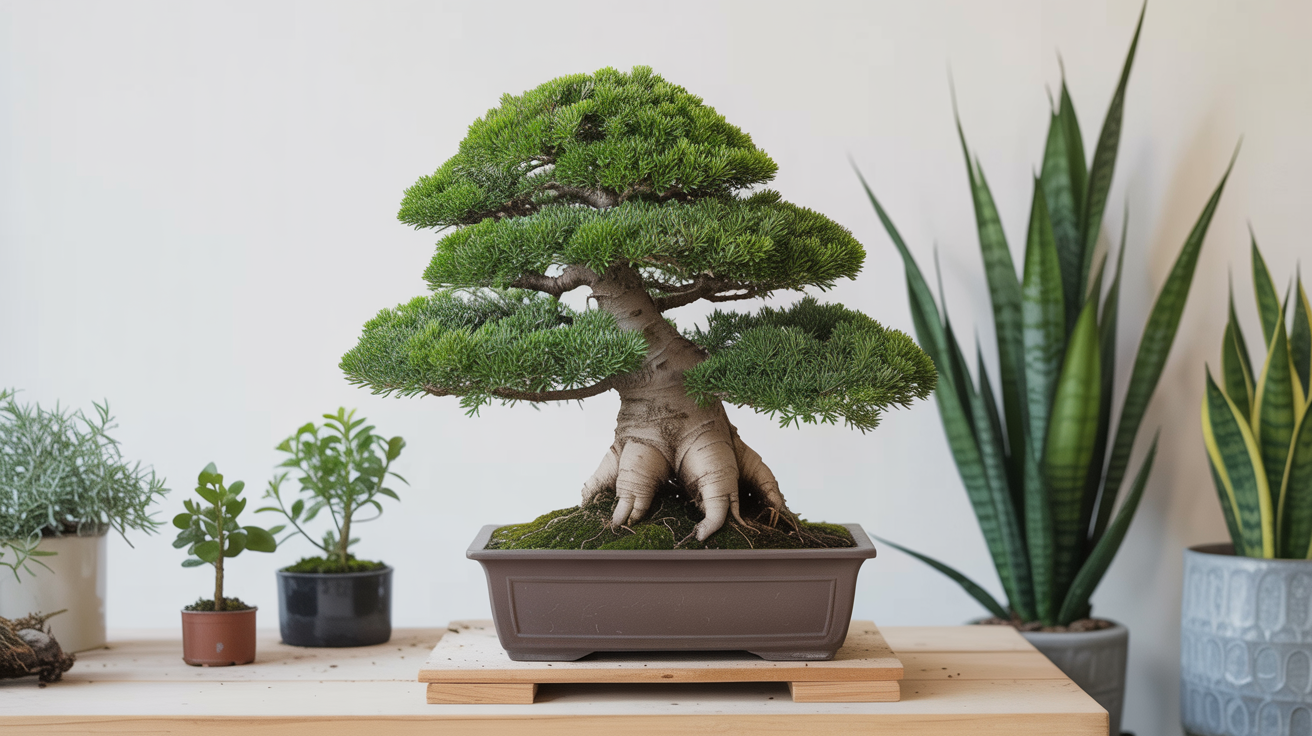
A garden center is one of the best places to find bonsai material. Junipers, azaleas, Japanese maples, and ficus are sold for a few dollars per pot, and many of them already have interesting trunk movement. With a plan and some patience, any of these can become a bonsai. This guide walks you through the process from selection to first wiring, so you can start shaping a real tree without spending much money.
Choosing the Right Nursery Plant
Not every plant on the shelf is a good candidate, so spend a little time evaluating before you buy.
What to Look For
Trunk diameter relative to height. A thicker trunk in proportion to the overall plant looks more convincing as a bonsai. Aim for a trunk that feels substantial between your fingers.
Nebari (surface roots). Roots that flare out from the base at soil level add age and visual weight. Even a hint of this flare is worth selecting for.
Existing movement. A trunk that bends slightly or changes direction is far more interesting to work with than a perfectly straight pole. You can bend straight material with wire, but you cannot easily undo years of straight growth.
Branch placement. Look for branches distributed at different heights and directions. Avoid plants where all branches emerge at the same point or where the lowest branch starts too high on the trunk.
Good species choices for beginners include Chinese elm, juniper, ficus (indoors), Japanese holly, and dwarf pomegranate. Avoid fast-growing hedge species with spongy wood, which rarely develop convincing taper quickly.
What to Skip
Plants with a single, dead-straight trunk, no low branches, and a weak root system are much harder starting points. You can still work with them, but progress will be slower.
Letting the Plant Settle Before You Style
Nursery plants have been growing in potting mix designed for retail sale, not bonsai training. Before you style, give the tree a chance to settle into your care.
Keep the plant in its nursery container for at least one growing season if you bought it in spring. Water consistently and feed lightly every few weeks so the roots establish. A stressed tree bends and wires poorly and drops branches unexpectedly.
If the plant looks healthy and is putting out new growth after a few months in your care, it is ready for the first session of styling.
Planning Your First Design
Before cutting or wiring anything, study the tree from every angle. Rotate it slowly and identify:
- The front. This is usually the angle that shows the best trunk movement and the most interesting root flare. Mark it with a stake or colored tape.
- The apex direction. Decide which way the top of the tree will lean or curve.
- Which branches to keep. Every branch you remove is permanent, so be conservative on the first session.
A simple framework that works for most beginner styling sessions: keep the lowest branch (it gives the tree weight), remove any branch that crosses directly in front of the trunk, and thin any pairs of opposite branches down to one.
Sketch your intended silhouette on a piece of paper before you pick up any tools. Even a rough shape drawn in 30 seconds helps you commit to a plan rather than cutting reactively.
Removing Unwanted Branches
Once you know which branches to keep, start removing.
Use sharp concave cutters or bypass pruners. Make cuts flush with the trunk or flush with a larger branch, and seal larger wounds with cut paste to encourage callus growth.
Work from the bottom of the tree up. After each cut, step back and reassess before making the next one. It is easy to over-prune in one session. Removing 20 to 30 percent of the foliage is generally safe for a healthy tree; removing more than half stresses it significantly.
Leave stubs where you are unsure. A stub is easier to remove later than a branch is to grow back.
Wiring the Remaining Branches
Wiring sets the angle and direction of each branch. For most nursery stock, aluminium wire in the 1.0 to 2.5 mm range covers the majority of branches. Thicker wire handles the trunk or heavy lower branches.
How to Apply the Wire
Anchor the wire before wrapping. Start at the base of the trunk or at a strong branch junction, then spiral the wire up at roughly a 45-degree angle. Parallel wraps and wraps that are too perpendicular both grip poorly.
Always wire two branches with one piece of wire by running the wire across the trunk from one branch to the other. This anchors both ends. See our beginner wiring guide for a full walkthrough of the technique.
Choosing Between Copper and Aluminium
For nursery stock styling sessions, aluminium is the practical choice. It is lighter, easier to bend, and more forgiving on thin bark. Copper holds a shape more permanently, which suits advanced work or thicker trunks. If you want to compare the two options in detail, the copper vs. aluminium guide covers the trade-offs.
Bending the Branches
After wiring, bend each branch gently to its intended angle. Move slowly and listen for any crackling sounds that indicate stress. Most healthy branches can take a 30 to 60 degree adjustment without breaking.
Downward-angled branches create the impression of age. Branches that are too upright look juvenile. Aim for a gentle downward sweep with the branch tip rising slightly at the end.
If you are unsure which wire gauge to start with, the wire gauge guide explains how to match thickness to branch diameter.
A Simple First-Session Checklist
| Step | What to Do |
|---|---|
| Select the front | Rotate the tree, pick the best angle |
| Mark branches to remove | Identify crossovers, redundant pairs, downward-pointing branches |
| Prune | Cut flush, seal larger wounds |
| Choose wire gauge | Match thickness to the branch being wired |
| Wire and bend | 45-degree spiral, anchor across two branches |
| Check for wire biting | Inspect every 2 to 4 weeks and remove wire before it marks the bark |
Remove wire before it cuts into expanding bark. Aluminium on a healthy branch typically needs to come off within two to four months during the growing season.
Frequently Asked Questions
Can I use any plant from a garden center, or only certain species? Most woody-stemmed species can be trained, but some respond much better than others. Species with small leaves, interesting bark, and the ability to withstand significant pruning tend to work well. Junipers, azaleas, maples, and ficus are popular for good reasons. Avoid species that resent root disturbance or have very large leaves that do not reduce with training.
Do I need to repot the nursery plant before I start styling? Not immediately. Styling and repotting in the same session stresses the tree twice at once. Style first, let the tree recover for a season, then repot into bonsai soil when it is healthy and actively growing. The nursery pot is fine for the first year of training.
How much can I prune in one session without hurting the tree? A general guideline for healthy trees is removing no more than one third of the foliage mass in a single session. If the tree has been with you for less than a full season, be even more conservative. You can always come back for a second session after the tree responds.
When should I do my first wiring session? Early spring, just before new growth begins, is the most common timing for deciduous trees because the leafless structure is easy to see. For evergreens like juniper, late summer after the season's growth has hardened off is another good window. Avoid wiring during the peak heat of summer or when the tree is visibly stressed.
How long before the tree starts to look like a real bonsai? Expect two to four years before the styling choices you made today look settled and convincing. Bonsai from nursery stock develops faster than trees grown from seed, but there are no shortcuts to the gradual thickening of callus, the refinement of branch ramification, and the overall sense of age that makes a bonsai compelling. What you are doing now is setting the skeleton. Time and steady care do the rest.