How to Water a Bonsai Tree the Right Way
Learn how to water a bonsai tree properly with this beginner guide — timing, technique, top watering vs soaking, and common mistakes to avoid.
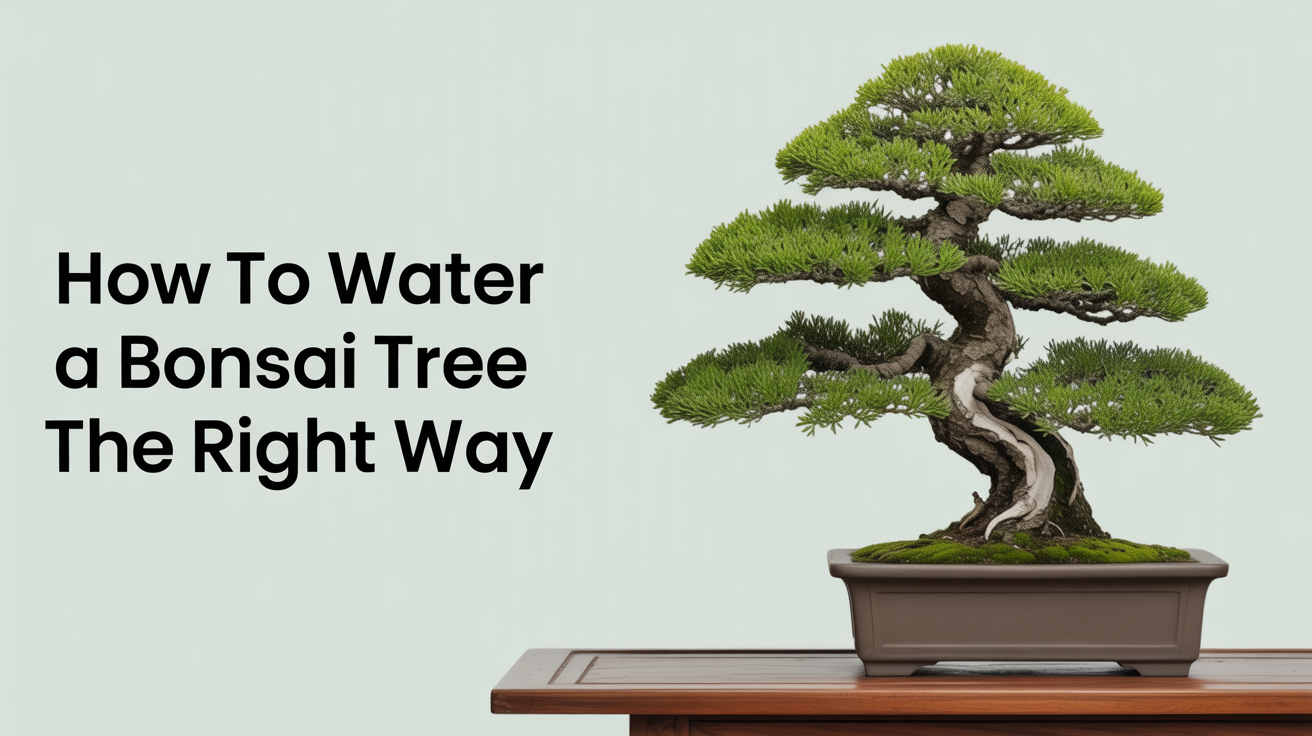
Watering kills more bonsai than anything else. Not because it's complicated, but because beginners either water on a fixed schedule ("every three days, no matter what") or wait until the tree looks stressed. Neither works. This guide will show you how to water a bonsai tree properly, including when to water, how to do it, and the two main methods so you can pick what suits your setup.
The one rule that matters most
Check the soil before you water. Every time.
Push your finger about an inch into the soil. If it feels damp, leave it. If it feels barely moist or dry, water it. That's the whole rule. Bonsai soil dries out fast, but it still needs a small dry period between waterings to keep roots healthy. A tree sitting in soggy soil around the clock will rot just as surely as one that dried out completely.
No fixed schedule will replace this check. A tree on a sunny windowsill in July might need water twice a day. The same tree in a cooler spot in October might go four days between waterings. Species, pot size, soil mix, temperature, and humidity all change things. Your finger is the most reliable sensor you have.
Top watering vs soaking bonsai
There are two main bonsai watering techniques. Both work; the right one depends on your tree's situation.
Top watering
This is the standard method. You water from above, letting the water soak down through the soil and drain out the holes at the bottom of the pot.
Do it slowly. A hard blast from a hose will wash soil off the surface, disturb roots, or send all the water running out before it soaks in. Use a watering can with a fine rose head, or a hose with a gentle spray attachment. Water the whole soil surface evenly, not just the base of the trunk. Go over it twice: the first pass wets the surface and the second pass lets water percolate deeper. Stop when water runs clear from the drainage holes.
Top watering is good for daily maintenance. It's quick, it rinses off dust and debris, and it lets you check the soil texture as you go.
Soaking
Place the whole pot in a tray or bucket of water until the soil surface gets wet, then lift it out and let it drain. This takes a few minutes but thoroughly saturates the root zone, which is useful if the soil has dried out completely (dry soil can repel water, so a quick top-water just runs straight through without penetrating).
Soak when:
- The soil has dried out more than it should have
- The soil mix drains so fast that top watering doesn't seem to saturate it
- You want a thorough reset after a dry spell
Don't soak every time as a routine. Most trees do fine with top watering daily and an occasional soak if things get very dry.
How often to water a bonsai
There's no single right answer, but the soil-check method above covers most situations. If you want more detail on building a reliable watering rhythm for your specific tree and season, the guide on how often you should water a bonsai breaks it down by species type and time of year.
A few patterns that hold for most beginner trees:
- Indoor tropical bonsai (ficus, jade, Chinese elm kept inside): check daily; water when the top inch is just barely moist
- Outdoor deciduous bonsai (maples, elms, hornbeam): check once or twice a day in summer; water may be needed daily or even twice daily in heat waves
- Outdoor conifers (junipers, pines): check daily; they like to dry out slightly more between waterings than deciduous trees, but don't let them go bone-dry
Smaller pots dry out faster than large ones. A tree in a shallow show pot might need water twice a day in warm weather. A tree in a large training pot might last two to three days in spring.
Water quality
Tap water works for most trees. If your tap water is very hard (high mineral content), you may see white deposits build up on the soil surface over time. That's mostly a cosmetic issue short-term, but heavy mineral buildup can affect soil drainage over months. Running water from a barrel that collects rain is ideal if you have one, since it's soft and slightly acidic.
Let very cold tap water sit for an hour before watering if you're in a cold-weather area and your tree is kept somewhere warm. Dramatic temperature swings stress roots.
Avoid water from a water softener. The salt-exchange process leaves sodium in the water, which harms roots over time.
Common mistakes that kill beginner trees
Watering on a schedule, not by feel. Already covered, but worth repeating. The tree doesn't know it's Tuesday.
Watering a little bit each time. A brief sprinkle wets the surface but leaves the deep roots dry. Water thoroughly until it drains out the bottom.
Letting the pot sit in a drip tray full of water. A shallow tray is fine to catch overflow, but empty it after an hour. Roots sitting in standing water get no oxygen and will rot.
Misting the leaves instead of watering the soil. Leaf misting can briefly raise humidity, which some tropicals like, but it does not replace watering the root zone. The roots need water, not the canopy.
Using ice-cold water from a hose left in the sun. Water that's been sitting in a hot rubber hose can be scalding. Run it for a few seconds first.
Ignoring the signs. If leaves are yellowing, dropping, or curling, the watering routine is often the first thing to check. For a rundown of what to look for, the guide on signs of overwatering or underwatering a bonsai covers the symptoms of both and how to tell them apart.
A note on soil and drainage
Your bonsai watering technique is only as good as your soil mix. Bonsai soil should drain fast and hold just enough moisture. Standard potting compost holds too much water and suffocates roots. A proper bonsai mix, usually some combination of akadama, pumice, and grit, lets excess water escape quickly while keeping the root zone aerated.
If your soil looks like dark garden compost and stays wet for days after watering, the soil is the problem, not your watering. Bonsai soil explained: what mix to use goes into what to look for and how to repot into something better.
A simple watering routine for beginners
- Every morning, push your finger into the soil about an inch.
- Dry or barely moist? Water it now, using a gentle rose or spray attachment.
- Water slowly, covering the whole surface, until water runs from the drainage holes.
- Check the drainage tray after 30 to 60 minutes and empty it if water is pooling.
- If the soil was bone-dry and the water seems to run straight through, try a 5-minute soak instead.
- In the evening, check again if it was a hot day or the pot is very small.
That's it. Once this becomes a habit, you'll start to read your tree's soil without thinking about it.
Frequently asked questions
How do I know if I'm watering too much or too little?
The most common signs of overwatering are yellowing leaves, soft or mushy stems near the base, and soil that stays wet for days. Underwatering shows up as dry, crispy leaf edges, leaves that drop suddenly, and soil that pulls away from the pot edges. Check the soil with your finger every day and you'll catch problems early before they become serious.
Can I use tap water on my bonsai?
Yes, in most cases. Standard tap water is fine for the majority of species. If you live somewhere with very hard water, you might notice white deposits on the soil over time, but this is usually not a serious problem for most beginners. Rainwater is better if you have easy access to it, but tap water won't hurt a healthy tree.
Should I water my bonsai if the leaves look wilted?
Check the soil first. Wilting with wet soil usually means root rot (too much water, not too little). Wilting with dry soil means the tree is thirsty. These need opposite responses, so checking before you act matters. If the soil is wet and the tree is wilting, move it somewhere with better airflow, stop watering, and let it dry out.
Why does water run straight through my bonsai without soaking in?
Dry soil, especially dry soil with a lot of fine particles, can become temporarily water-repellent. The water flows along the surface or straight through cracks and out the bottom without penetrating. The fix is to either water very slowly in small amounts over several passes, or to do a soak: set the pot in a shallow tray of water for 5 to 10 minutes so the soil absorbs from below.
Is it okay to water bonsai from the bottom all the time?
Occasional soaking is fine and useful, but doing it as your only method means the top layer of soil never gets flushed. That allows salts and minerals from water and fertilizer to accumulate near the surface. Most growers use top watering as their main method and soak occasionally when needed.