Signs You're Overwatering or Underwatering a Bonsai
Learn the key overwatering bonsai signs and underwatered bonsai symptoms so you can fix your watering routine before your tree suffers.
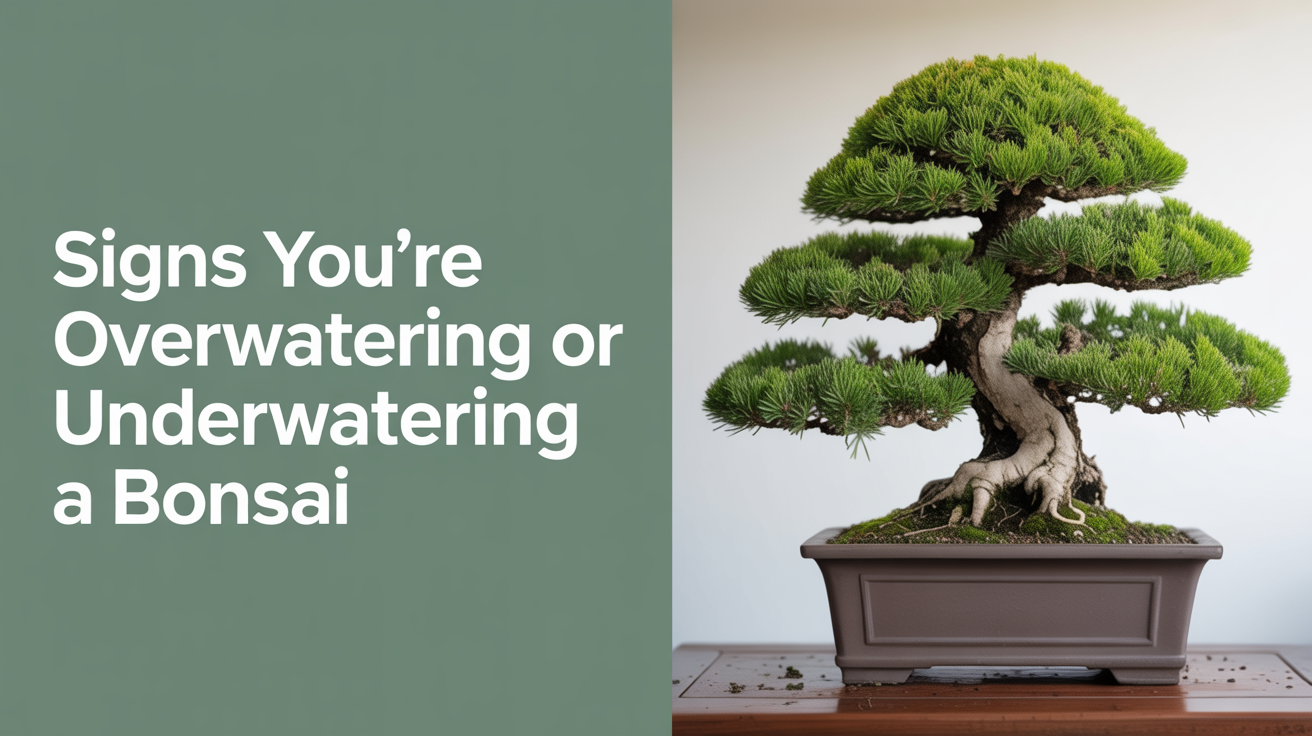
Watering kills more beginner bonsai than almost anything else. Not drought, not pests. Water. The tricky part is that overwatering and underwatering can look similar at a glance: droopy leaves, yellowing, a tree that just looks off. Knowing which problem you're dealing with changes everything about how you fix it.
This guide walks through both sets of symptoms, explains why they happen, and gives you a simple way to tell them apart.
At a Glance
- Overwatering and underwatering can both cause droopy, yellowing leaves; the fix for one makes the other worse, so diagnosis matters.
- Overwatered leaves stay soft and plump as they yellow and drop. Underwatered leaves go dry, crisp, or curled first.
- Soil that's still damp two to three days after watering points to overwatering or poor drainage. Soil pulling away from the pot edge points to underwatering.
- The most reliable single check is the roots themselves: firm and pale means healthy, mushy and dark means rot.
- Both conditions cause wilting, but through opposite mechanisms: one from too little water, the other from roots too waterlogged to absorb what's there.
- Catch either problem early. A tree with mild symptoms usually recovers in weeks; one with advanced root rot may need a full growing season.
Overwatering bonsai signs to look for
Giving a bonsai too much water is the most common beginner mistake, largely because it feels like good care. You're attentive. You water daily. The tree dies anyway. Here's what's actually happening and what to look for.
Yellowing leaves that fall off while still soft
Leaves that turn yellow and drop while they're still plump and slightly soft are a classic sign of too much water. When roots sit in perpetually wet soil, they can't take in the oxygen they need for respiration. The leaves start to fail because the roots are suffocating, not because the tree is thirsty. In practice, roots need oxygen from air pockets in the soil almost as much as they need water itself, which is the whole reason bonsai soil is built to drain fast rather than hold moisture like garden compost.
This is different from natural leaf drop. If yellow leaves feel dry or papery before falling, underwatering is more likely.
Soil that stays wet for days
Press your finger about an inch into the soil. If it still feels damp two or three days after watering, and you haven't had heavy rain, your drainage or your watering frequency is the problem. Bonsai soil should approach dryness between waterings, not stay wet.
Poor-draining soil compounds this fast. Standard potting compost holds too much moisture for bonsai roots. If you're still using it, switching to a proper bonsai soil mix will make your watering much easier to manage.
Mushy or blackened roots
This is the most serious symptom: bonsai root rot signs. If you gently lift the tree from its pot and the roots feel mushy, look dark brown or black, or smell sour, rot has set in. Root rot develops in anoxic, oxygen-starved soil, which is exactly the condition constant overwatering or poor drainage creates. Healthy roots are firm and either white, tan, or light brown.
Root rot spreads quickly. A tree with badly rotted roots may be recoverable if you act fast, but you'll need to remove the dead roots, treat what remains, and repot into fresh, fast-draining soil. A tree left to sit in that condition rarely recovers on its own, and once rot reaches the main structural roots near the trunk, the odds drop sharply.
Moss or algae on the soil surface
A thin green or blue-green crust forming on the soil surface means the top layer is staying moist almost all the time. That's a useful early signal before more serious symptoms appear. Bonsai soil shouldn't look wet 24 hours after watering.
Branches dying back from the tips
Dieback starting at the branch tips, while the rest of the tree still looks alive, can point to root rot that hasn't fully shown in the leaves yet. The tree is losing its ability to pump water up into the canopy, because the damaged roots simply can't keep up with demand even when soil moisture is high.
Underwatered bonsai symptoms
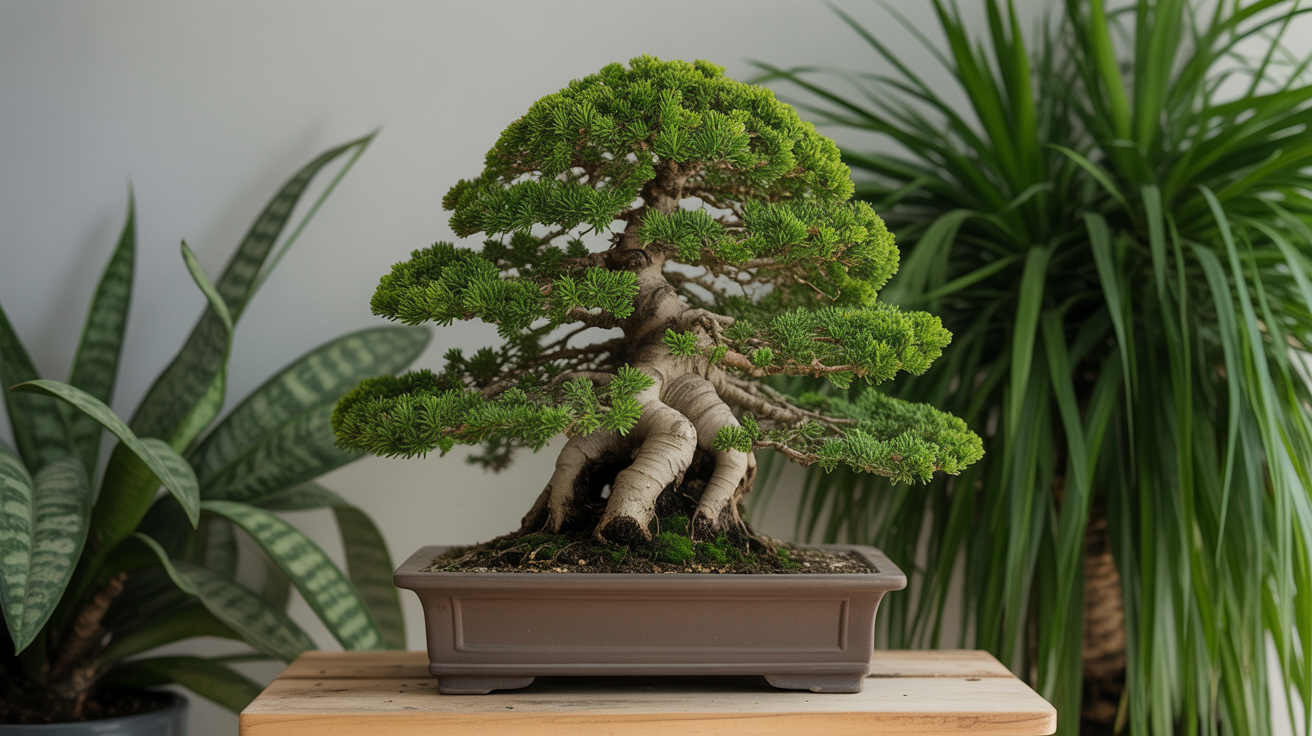
An underwatered bonsai is in trouble too, but the signs are different enough that you can usually tell the two apart once you know what to look for.
Leaves that feel dry, crisp, or curled
Dry, crunchy, or curled leaves are the most obvious underwatered bonsai symptom. The tree is losing water through its leaves faster than the roots can replace it. In a mild case, leaves droop but still feel slightly flexible. In a severe case, they're brittle and snap rather than bend.
Junipers and other conifers sometimes turn brown from the inside out when they dry out, rather than from the tips. Check deep inside the canopy, not just the outer growth.
Soil that pulls away from the pot edges
When soil dries out completely, it shrinks. You'll see a gap opening up between the soil and the pot wall. This is a problem beyond just drought: when you water next, the water runs straight down that gap and out the drainage holes without ever soaking the root ball.
If this has happened, submerge the whole pot in a container of water for ten minutes. That lets the soil rehydrate evenly. Then check your watering frequency.
Wilting that doesn't recover overnight
Slight wilting in afternoon heat is normal for many trees and usually resolves by morning. If the leaves are still limp the next morning, the tree likely needs water. Wilting happens when a plant loses water faster than its roots can absorb it, causing cells to lose turgor pressure; the same mechanical result can come from a dry rootball or from waterlogged roots that can't take up water at all, which is why wilting alone doesn't tell you which problem you have. Try the finger test and other timing cues to build a more reliable routine.
Dry soil all the way to the bottom
A finger-check only at the surface misses what's happening below. Push your finger a full inch into the soil. If it's completely dry at that depth, it's time to water. If it's dry only at the top half-inch, hold off another day.
How to tell overwatering from underwatering
Both problems can cause droopy, yellowing leaves. Here's a quick way to tell them apart.
| Symptom | Overwatered | Underwatered |
|---|---|---|
| Leaf texture when drooping | Soft, still plump | Dry, papery, or curled |
| Soil feel 2 days after watering | Still damp or wet | Bone dry or pulling from pot |
| Root appearance | Mushy, dark, may smell | Dry, possibly brittle |
| Leaf color | Yellow, then brown | Brown or gray, often at tips |
| Recovery after watering | Does not improve | Often improves within hours |
When in doubt, dig down and look at the roots. That's the most honest read of the situation.
How fast symptoms show up and resolve
| Stage | Underwatering timeline | Overwatering timeline |
|---|---|---|
| First visible symptom | Hours to 1-2 days in hot weather | 3-7 days of consistently wet soil |
| Point of real concern | Rootball fully dry, leaves brittle | Roots visibly mushy or foul-smelling |
| Recovery after correcting | Often hours to a few days | Weeks, sometimes a full growing season if rot is advanced |
Underwatering is faster to cause visible stress but also faster to fix. Overwatering is slower to show and slower to reverse, which is exactly why it catches attentive beginners off guard.
What to do if you've been overwatering
First, stop watering until the soil has a chance to partially dry. Then:
- Check the drainage holes. If they're clogged, clear them.
- Lift the tree from its pot and inspect the roots. Trim any that are black and mushy with clean, sharp scissors or shears.
- If root rot has spread significantly, repot into fresh, fast-draining bonsai soil.
- Place the tree somewhere bright but out of direct harsh afternoon sun for a week or two while it recovers.
- Resume watering only when the soil is approaching dryness, not on a fixed daily schedule.
Good technique on how to water a bonsai tree properly makes this much easier to manage long-term.
What to do if you've been underwatering
Rehydrate carefully. Soaking the pot in a basin of water for ten minutes is the most reliable method, especially if the soil has dried out completely and pulled from the pot edges. Then:
- Let the tree drain fully before putting it back in its spot.
- Check moisture levels once a day for the next week.
- In hot or dry weather, you may need to water more than once a day for some species. Junipers in midsummer heat, for example, can dry out fast.
- Consider whether the pot is too small, or whether the soil is draining too fast for your climate.
Frequently asked questions
Is my bonsai getting too much water if it rains a lot?
Possibly, yes. Outdoor bonsai that sit outside through prolonged wet spells can become waterlogged just as easily as indoor trees that are watered too often. Move the tree under a roof overhang or shelter during heavy rain, or check the drainage situation carefully. If the pot has no drainage holes or the soil is standard compost, fix that first.
Can a bonsai recover from root rot?
Sometimes. It depends on how much of the root system is still healthy. If more than half the roots are rotten, recovery is difficult. If you catch it early with only a small portion affected, trimming the dead roots, repotting into fresh soil, and scaling back watering gives the tree a real chance. Be patient: recovery can take a full growing season.
Why do my bonsai leaves keep turning yellow even when I'm following a watering schedule?
A fixed watering schedule is part of the problem. Bonsai need water based on how fast the soil dries out, and that changes with the season, the temperature, the humidity, and the size of the pot. A schedule that works in spring may drown the tree in autumn. Use the finger test or a wooden chopstick pressed into the soil to decide when to water, not the calendar.
How do I know if the problem is watering or something else?
Watering issues are the most common cause of decline in beginner bonsai, but not the only one. If you've corrected your watering and the tree still looks bad after a few weeks, consider whether it's getting enough light, whether the pot is too small, or whether pests are involved. Check the undersides of leaves for tiny insects, and look at the trunk base for unusual discoloration or soft spots.
Should I mist my bonsai to help with underwatering?
Misting the leaves adds a little humidity but doesn't replace watering the soil. It can help a slightly stressed tree on a hot afternoon, but it won't rehydrate a dry root ball. Misting alone is not a substitute for proper soil watering. If the soil is dry, water it.
Can a tree be overwatered and underwatered at the same time?
It happens more than you'd think, usually with compacted or poor-draining soil. The surface stays wet because water can't drain through properly, while the lower root zone dries out because water never reaches it evenly. If your finger test gives you confusing, inconsistent readings across the pot, that's a strong sign the soil itself, not your watering habit, is the real problem. Repotting into a proper fast-draining mix usually resolves it.