When to Remove Bonsai Wire (Before It Bites In)
Learn when to remove bonsai wire to prevent scarring. Signs the wire has set, how long to leave it on, and the right way to take it off safely.
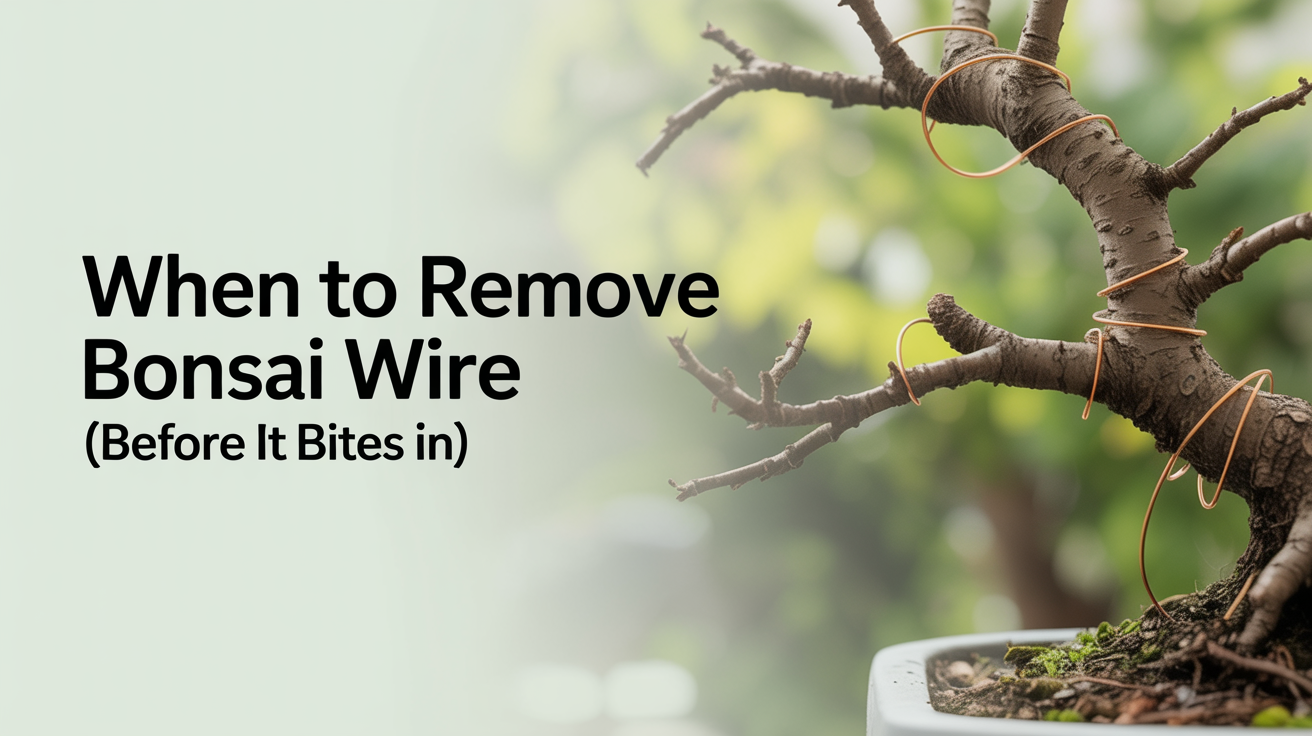
Wire comes off when the branch holds its new position on its own. That moment arrives sooner than most beginners expect, and waiting too long is one of the most common mistakes in beginner bonsai work. This guide explains how to read the signs, what realistic timelines look like, and how to remove wire without damaging bark.
How Wire Actually Works
Wire works by holding a branch in a new angle long enough for the wood to "remember" it. As the tree grows, the cambium layer thickens around the bend, and the branch gradually stiffens in its new position. Once that stiffening has happened, the wire has done its job.
The problem is that the same growth that sets the bend also expands the branch outward. If the wire is still on when the bark starts pushing against it, the coils cut into the tissue and leave spiral scars. On thin-barked species like maples and beeches, those scars can be permanent.
Wire does not need to stay on until the scars appear. It needs to come off just before they would.
Signs That Wire Is Ready to Come Off
Rather than watching the calendar, watch the branch itself. These are the signs that removal time is close:
The branch no longer springs back. With the wire still on, gently press the branch slightly toward its original position and let go. If it returns to the wired angle rather than bouncing all the way back, the wood has begun to set.
Bark is starting to look pinched. Any slight tightening of the bark around the coils means growth is catching up to the wire. This is the last warning before scarring begins. Remove the wire the same day you notice this.
Coils are no longer loose. When you first wire a branch, there is a small gap between the wire and the bark. Once that gap closes and the wire feels snug, growth has reached the wire. Do not wait past this point.
The growing season is active. Fast growth happens in spring and early summer. A branch wired in March may need to come off by May or June. The same branch wired in autumn on a deciduous tree might stay on through winter and into the following spring without issue, because growth slows dramatically in the cold months.
How Long to Leave Wire On Bonsai
There is no universal answer, but rough timelines help beginners set reasonable expectations.
| Species type | Active season | Approximate wiring window |
|---|---|---|
| Fast-growing deciduous (trident maple, Chinese elm) | Spring through summer | 4 to 8 weeks |
| Slower deciduous (Japanese maple) | Spring through summer | 6 to 12 weeks |
| Tropical species (ficus, jade) | Year-round indoors | 6 to 10 weeks in active growth |
| Conifers (juniper, pine) | Spring flush and late summer | 2 to 6 months depending on age |
| Older, thicker branches (any species) | Any | Longer, but check monthly |
These are starting points. A young, vigorous tree in a warm climate can bite wire in four weeks. An older tree in a cool autumn can safely hold wire for several months. Check every two to three weeks during the growing season, more often in spring when growth is fastest.
See copper vs aluminium bonsai wire for more on how wire material affects how quickly it bites in. Softer aluminium wire tends to expand slightly with the bark before cutting; harder copper holds tight and bites sooner on fast-growing species.
How to Remove Wire Without Causing Damage
The safest method is to cut the wire off in short sections rather than unwinding it. Unwinding pulls against the branch and can snap a partially set bend or bruise tender bark.
Use proper wire cutters with a pointed tip rather than scissors or household pliers. Make cuts every two or three coils and lift the segments away. Work slowly around bends where the wire is under tension.
Step-by-step removal:
- Start at one end of the wired section and make a cut through the wire close to the branch.
- Move two to three coils along and make another cut. Lift the short segment free.
- Repeat until the entire run is removed.
- Examine the bark for any indentations. Slight marks usually fade over one to two growing seasons. Deep spiral cuts may take longer or leave a permanent texture change.
If you see indentation marks after removal, do not re-wire immediately. Give the branch time to recover and the bark to settle before applying fresh wire. When you do re-wire, offset the coils slightly from the previous position to avoid tracing the same groove.
For a detailed walkthrough of applying wire correctly from the start, see how to wire a bonsai tree: a beginner's guide. Getting the angle and tension right at the start reduces the risk of premature biting.
What to Do If the Wire Has Already Bitten In
If you find wire that has already started to cut into the bark, remove it immediately. Do not wait for a better time or try to loosen it gradually.
Cut the wire out in sections as described above. The branch will show spiral grooves. Depending on depth and species, these may:
- Fade almost completely within one to two seasons (common on vigorous trees)
- Leave a subtle texture change that blends into character bark over time
- Remain visible as permanent marks on smooth-barked species
After removal, keep the tree well-watered and avoid additional stress. Some practitioners apply diluted wound paste to deep cuts, though this is optional and not universally recommended. The tree will prioritize healing the tissue on its own.
The branch position may or may not hold after early removal. If the bend reverts partially, you can re-wire after the bark heals, using lighter gauge wire and a shorter application period. Understanding what wire gauge to use on a bonsai helps you choose lighter wire that is less likely to bite in quickly while still providing enough support.
Frequently Asked Questions
Can I leave wire on over winter? On deciduous trees that go dormant, yes. Growth slows to nearly nothing in cold months, so wire applied in late autumn can safely stay on through winter. Begin checking again as soon as new buds swell in early spring, because growth resumes quickly and wire can bite in within a few weeks of the first flush.
My wire cut in a little before I caught it. Is the branch ruined? In most cases, no. Light scarring fades over one to two growing seasons as the bark regenerates. Deep cuts on smooth-barked species like Japanese maple may leave a permanent mark, but the branch is usually still healthy and functional. Remove the wire, let the tree recover, and re-wire if needed once the bark has settled.
How do I know if the branch has actually set its new position? After removing the wire, watch the branch over the next few days. If it drifts back slightly and then holds, it has partially set. If it springs all the way back to the original position, it needs more time in wire after recovery. You can re-wire with a fresh run of wire once any mark from the first application has faded.
Does wire need to come off faster in summer? Yes. Warm temperatures accelerate growth, which means the branch expands faster and the wire tightens sooner. During peak summer growth, check wired branches every one to two weeks rather than once a month. Many experienced growers check every ten days on fast-growing species during summer.
Should I remove all the wire at once or section by section? Remove it in short sections by cutting rather than unwinding the whole run at once. This protects branches that have partially set from being torqued back toward their original position during removal. It also reduces the risk of slipping and gouging the bark.
when-to-remove-bonsai-wire-before-it-bites-in: done