Bonsai Summer Care: Heat, Watering, and Sun
Keep your bonsai healthy through summer with practical guidance on watering schedules, shade management, and protecting trees from extreme heat.
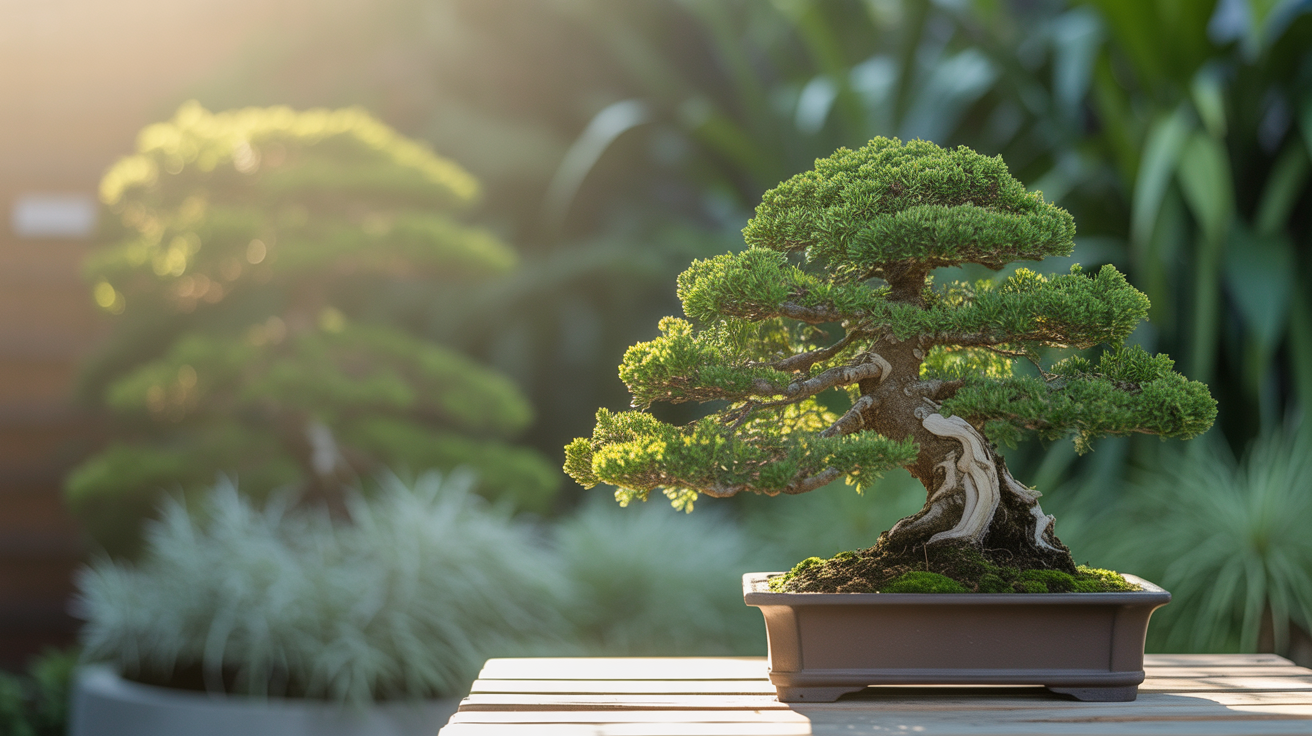
Summer puts a bonsai under more stress than any other season. Small containers dry out fast, intense sun scorches foliage, and heat spikes can catch even experienced growers off guard. The good news is that most bonsai handle summer fine as long as two things stay in order: consistent watering and sensible light management. This guide walks through both, plus a few extra adjustments that will carry your tree through the warm months without drama.
Understanding What Summer Does to a Bonsai
A bonsai lives in a shallow pot with limited soil volume. On a hot day, that soil can go from moist to bone dry in a few hours. Meanwhile, the tree is actively transpiring through its leaves, pushing water out of the canopy faster than it can pull it up from the roots.
The result, if you miss a watering on a 35°C (95°F) afternoon, is wilting. Catch it quickly and the tree usually recovers. Miss it two days in a row and you may be looking at branch dieback or worse.
Recognizing this dynamic is the starting point for good summer care. Everything else follows from it.
Summer Watering: Frequency and Technique
How Often to Water
There is no universal schedule for summer bonsai watering. The honest answer is: check the soil every morning and again in early afternoon. Push your finger about a centimeter into the soil. If it is dry or just barely damp, water now.
During a heat wave, some trees need watering twice a day. In mild summer weather, once may be enough. Soil type, pot size, species, and local humidity all shift that number. Checking beats guessing.
How to Water Properly
Water slowly and thoroughly until water runs freely from every drainage hole. This ensures the entire root mass gets wet, not just the surface. Shallow watering encourages shallow roots and leaves the lower portion of the pot dry even when the top looks moist.
A few practical points for summer:
- Water in the morning when possible. Roots absorb water efficiently before the day heats up, and foliage dries before nightfall, reducing the risk of fungal problems.
- Avoid watering at midday in direct sun. Cold water on sun-heated foliage can cause minor leaf scorch on sensitive species. If a tree is wilting at noon, move it to shade first, water it, and let it recover.
- Use a gentle rose attachment on your watering can or hose. A strong stream displaces soil and disrupts surface roots.
Signs You Are Under-watering vs. Over-watering
| Symptom | Likely Cause |
|---|---|
| Leaves curling inward, tips browning | Under-watering or heat stress |
| Soil stays wet for more than two days | Over-watering or poor drainage |
| Leaves yellowing and dropping (lower canopy first) | Over-watering |
| Leaf drop after a heat spike | Heat and drought stress combined |
| Soft, mushy soil smell | Root rot beginning |
Managing Sun and Shade
How Much Sun Does a Bonsai Need in Summer?
Most outdoor species want full sun for the majority of the day, and that holds true in summer. Sun drives photosynthesis, which feeds the tree and produces the fine ramification you are working toward with training.
That said, there is a practical ceiling. When temperatures climb past roughly 35°C (95°F), intense afternoon sun can overheat both the pot and the foliage, stressing the tree more than it benefits from the light.
Providing Afternoon Shade
The simplest adjustment for bonsai in hot weather is to give trees a break from the sun between roughly 1 p.m. and 4 p.m. A shade cloth at 30 to 40 percent coverage, a fence or tree shadow, or simply moving pots under a porch roof during the hottest window all accomplish this.
A few specifics by tree type:
- Junipers and pines tolerate heat and full sun well. In most climates, they only need shade on days above 38°C (100°F).
- Maples and zelkova appreciate afternoon shade even at moderate summer temperatures. Their leaves can scorch when a hot, dry wind blows across them.
- Ficus and tropical species handle heat readily but may need protection during unusually intense heat events if you garden in a very hot region.
When in doubt, observe your tree. Leaf curl and a dull, grayish-green color signal too much heat load. Leggy, stretched growth signals too little light.
Protecting Bonsai from Heat Spikes and Heat Waves
A single extreme day is manageable. A week of temperatures above 38°C (100°F) is a different situation.
During a sustained heat wave, consider these adjustments:
Move pots temporarily. A tree that usually thrives on a sunny bench may do better on the north or east side of your house for the duration of the heat event. This is not a permanent change; once temperatures drop, move it back.
Increase watering frequency. You may need to water morning and evening. Check mid-afternoon too if the day is especially intense.
Mulch the soil surface lightly. A thin layer of sphagnum moss pressed over the top of the soil slows evaporation. Do not pack it so thick that drainage is impeded.
Mist foliage in the early morning. This raises humidity around the leaves briefly, which helps the tree manage transpiration. Avoid misting in full afternoon sun.
Place pots on a damp gravel tray. As the water evaporates from the gravel, it creates a small microclimate of slightly higher humidity around the pot.
None of these replace watering, but together they reduce the heat burden on the tree.
Feeding During Summer
Summer is an active growing season, so feeding continues. Most beginners feed every two to four weeks with a balanced or slightly low-nitrogen fertilizer. High nitrogen pushes vigorous, coarse growth; a lower-nitrogen or balanced formula during summer encourages more controlled growth and keeps the tree from putting out shoots so fast that your shaping work falls behind.
Slow-release organic pellets work well for beginners because they reduce the risk of over-feeding. Liquid fertilizers work too, but apply at half-strength if the tree is already heat-stressed.
If you repotted the tree within the last year, check your repotting guide for any species-specific feeding notes. Trees that had major root work done are more sensitive to concentrated fertilizers and may need a lighter touch through summer.
Pest and Health Checks
Warm, dry summers favor spider mites, aphids, and scale insects. Check the undersides of leaves weekly. If you see fine webbing, stippled foliage, or sticky residue, treat early. A strong blast of water from the hose removes most mite populations without chemicals. Neem oil or insecticidal soap handles more stubborn infestations.
Also keep an eye on the drainage holes. Roots that are circling out of the bottom of the pot in summer may be signaling that the tree is due for repotting in spring. Note it for next year but do not repot in the heat of summer; wait until late winter or early spring. For timing details, see when to repot a bonsai.
Frequently Asked Questions
Can I leave my outdoor bonsai in full sun all summer?
For most species, full morning sun with some afternoon relief on the hottest days is the right balance. Junipers and pines handle more full sun than maples or hornbeam, which can scorch. In a mild climate with summer highs below 30°C (86°F), most trees manage full sun without any shade adjustment.
My bonsai leaves are turning brown at the tips. Is it heat damage?
Browning tips are the most common sign of under-watering or hot, drying wind. Check the soil first. If it is dry, water thoroughly and move the tree out of direct afternoon sun for a day or two. If soil moisture was fine and the browning continues, consider whether the pot is sitting on a reflective surface (concrete, metal staging) that might be radiating heat into the roots.
Should I stop watering in the evening to prevent root rot?
Evening watering is generally fine, especially if morning watering is not enough to keep the soil moist through a hot day. What causes root rot is not evening watering itself but chronically wet soil with poor drainage. Make sure your pot has adequate drainage holes and your soil mix drains freely.
Do I need to mist my bonsai daily in summer?
Misting is optional. It briefly raises humidity and helps on very dry, windy days, but it does not replace proper root watering. If your tree is in a very arid climate, morning misting is a useful supplement. In a normally humid region, it matters less.
Can I do any pruning or shaping during summer?
Light pruning to maintain shape and pinching back new shoots is fine throughout summer. Avoid heavy structural pruning or significant root work in summer heat; save that for spring or early autumn. If you are considering a major root prune, read through how to root prune a bonsai safely before deciding on timing.