Bonsai Winter Care: Protecting Your Tree from Frost
Learn how to protect bonsai in winter with simple frost protection strategies for both outdoor and indoor species.
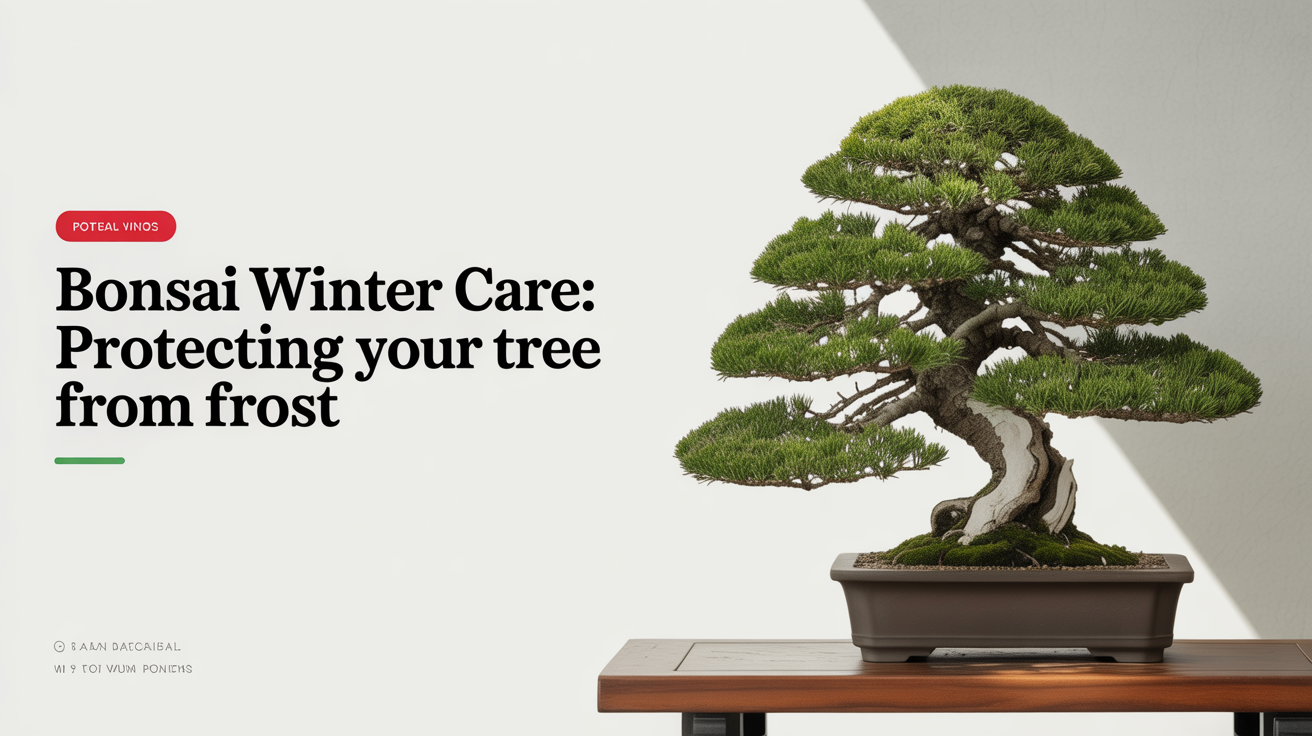
Winter is the season that trips up more beginners than any other. The answer to "what do I do with my bonsai when it gets cold?" depends almost entirely on what species you have. Get that right, and winter becomes the easiest stretch of the year to manage.
Outdoor Species vs. Indoor Species: The First Question to Answer
Many beginners assume all bonsai are fragile houseplants that need to come inside at the first sign of cold. That assumption leads to real problems.
Hardy outdoor species, things like juniper, pine, Japanese maple, elm, and most conifers native to temperate climates, require a cold dormancy period each year. If you bring them indoors, where it's warm and dry, they never go dormant properly. The result is weakened growth, vulnerability to pests, and sometimes slow decline. These trees genuinely need cold. They just don't need to freeze solid or sit exposed to hard frost with no shelter at all.
Tropical and subtropical species, including ficus, fukien tea, jade, and most serissa, have zero frost tolerance. They belong inside when temperatures drop below around 50°F (10°C). For them, "winter care" mainly means adjusting light and humidity indoors.
If you're unsure which category your tree falls into, the species name on the nursery tag or a quick search will tell you. This is worth knowing before autumn rather than after the first freeze.
What "Frost Protection" Actually Means for Hardy Bonsai
Hardy trees need cold to rest, but they don't need the extreme temperature swings that come from sitting unprotected on a balcony railing or exposed deck. The root system is the most vulnerable part. A tree in the ground has enormous insulating soil mass around its roots. A tree in a small pot has almost none.
When temperatures swing from 10°F at night to 40°F by afternoon, the roots thaw and refreeze repeatedly. That cycling is more damaging than sustained cold. The goal with frost protection is to buffer those swings and keep the root zone at a steadier, cool temperature rather than eliminating cold altogether.
What this looks like in practice:
- Move trees to an unheated garage, shed, or cold greenhouse once hard frosts arrive (typically below 25°F / -4°C, though more cold-sensitive species want protection earlier)
- Place trees on the ground rather than elevated shelves so they benefit from ground-level insulation
- Group pots together; the mass helps buffer temperature swings
- For extra protection in very cold climates, loosely wrap pots in burlap or frost cloth, or partially bury them in the ground for the season
The interior space doesn't need to stay above freezing every night. Many hardy species do fine with temperatures down to 15-20°F (-9 to -7°C) when sheltered from wind and repeated freeze-thaw cycling. What you want to avoid is sustained temperatures below 10°F (-12°C) for extended periods, especially in a lightweight pot with minimal soil volume.
Light and Watering Through Dormancy
Hardy trees in dormancy don't need direct sunlight the way they do during the growing season. A sheltered spot near a window in a cold garage is sufficient. Once leaves have dropped on deciduous species, you can move them into a darker corner without issue.
Watering slows down significantly but doesn't stop. The tree is dormant, not dead. Check soil moisture every week or two and water lightly if the top inch of soil has dried out. The key error to avoid is letting the pot dry out completely, which can kill the fine roots even in a dormant tree. Equally, sitting in a pot of waterlogged soil during cold temperatures creates conditions for root rot.
Do not fertilize during true dormancy. Feeding triggers growth, and new growth appearing in midwinter is vulnerable and will likely die back.
Tropical Bonsai Indoors: Managing the Move
If your tree is a tropical species, bringing it inside before temperatures drop below its tolerance threshold is the right move. The challenge is replicating enough light.
Most homes in winter don't have windows bright enough to keep a tropical bonsai healthy without supplemental lighting. A south-facing window is the best natural option. A grow light placed 6-12 inches above the tree for 12-14 hours per day works well when window light falls short.
Indoor heating dries the air significantly, which tropical bonsai don't enjoy. Set the pot on a humidity tray (a shallow tray filled with gravel and water, with the pot sitting above the waterline rather than in it), or run a small humidifier nearby. Misting the foliage has limited effect and can promote fungal issues if the leaves stay damp overnight.
Reduce watering compared to summer but don't let the soil dry out completely. Tropical species don't go fully dormant the way hardy trees do; they're just slowing down.
A Simple Timeline for Temperate Climates
| Month | Action |
|---|---|
| September | Begin reducing fertilizer; enjoy the last of the growing season |
| October | Stop fertilizing entirely; monitor nighttime lows; move tropical bonsai inside when temps approach 50°F |
| November | Move hardy trees into sheltered, unheated space when hard frosts arrive |
| December–February | Check soil moisture every 1-2 weeks; water lightly as needed; minimal intervention |
| March | Hardy trees can move back outside as temperatures stabilize above freezing at night |
| April | Resume fertilizing as new growth appears |
Exact timing shifts depending on your climate zone. A gardener in USDA zone 5 will be sheltering trees in October; someone in zone 9 may not need to shelter at all.
Repotting Timing and Winter
One common question is whether winter is a good time to repot. For most species, the answer is no. Repotting is best done in late winter or early spring, just before new buds begin to swell but after the coldest temperatures have passed. Repotting during active dormancy can cause unnecessary stress, and repotting in autumn leaves the tree vulnerable during its most sensitive season.
If you're curious about the repotting process itself, how to repot a bonsai tree: a step-by-step guide walks through the mechanics in detail, and when to repot a bonsai and how to tell helps you read the signs that your tree is ready. Root pruning, which happens at the same time as repotting, is covered in how to root prune a bonsai safely.
Frequently Asked Questions
Do bonsai need to be brought inside in winter?
It depends entirely on the species. Hardy outdoor species like juniper, pine, and Japanese maple need cold dormancy and should stay outside or in an unheated shelter, not a warm house. Tropical species like ficus and fukien tea cannot tolerate frost and need to come inside before temperatures drop below roughly 50°F (10°C).
At what temperature should I protect my bonsai from frost?
For hardy species, light frost (28-32°F / -2-0°C) is generally fine for most temperate trees, but repeated hard freezes below 25°F (-4°C) warrant moving the tree to a sheltered, unheated space. Tropical species need to come inside before nighttime temperatures reach 50°F (10°C).
Can I keep my bonsai in the garage for winter?
An unheated garage is one of the best options for overwintering hardy outdoor bonsai. It buffers wind and the most extreme temperature swings while keeping the tree cold enough to stay dormant. Aim for temperatures that stay above 10-15°F (-12 to -9°C) on the coldest nights. If your garage drops below that, add extra insulation around the pots or find a slightly warmer sheltered spot.
My bonsai lost all its leaves in autumn. Is it dead?
Probably not, if it's a deciduous species like Japanese maple or trident maple. Leaf drop in autumn is normal and expected. A dormant deciduous bonsai looks like a small bare tree. To check if it's alive, scratch a small patch of bark on a branch with your fingernail; green or white tissue underneath means the branch is healthy.
How often should I water my bonsai in winter?
Hardy trees in dormancy need much less water than during the growing season, but the soil should never dry out completely. Check every 1-2 weeks and water lightly when the top inch of soil is dry. Tropical species kept indoors will need more regular checking since indoor heating dries soil faster than you might expect.