Ficus Bonsai Care for Beginners
Learn ficus bonsai care step by step: watering, light, soil, pruning, and common pitfalls every beginner needs to know.
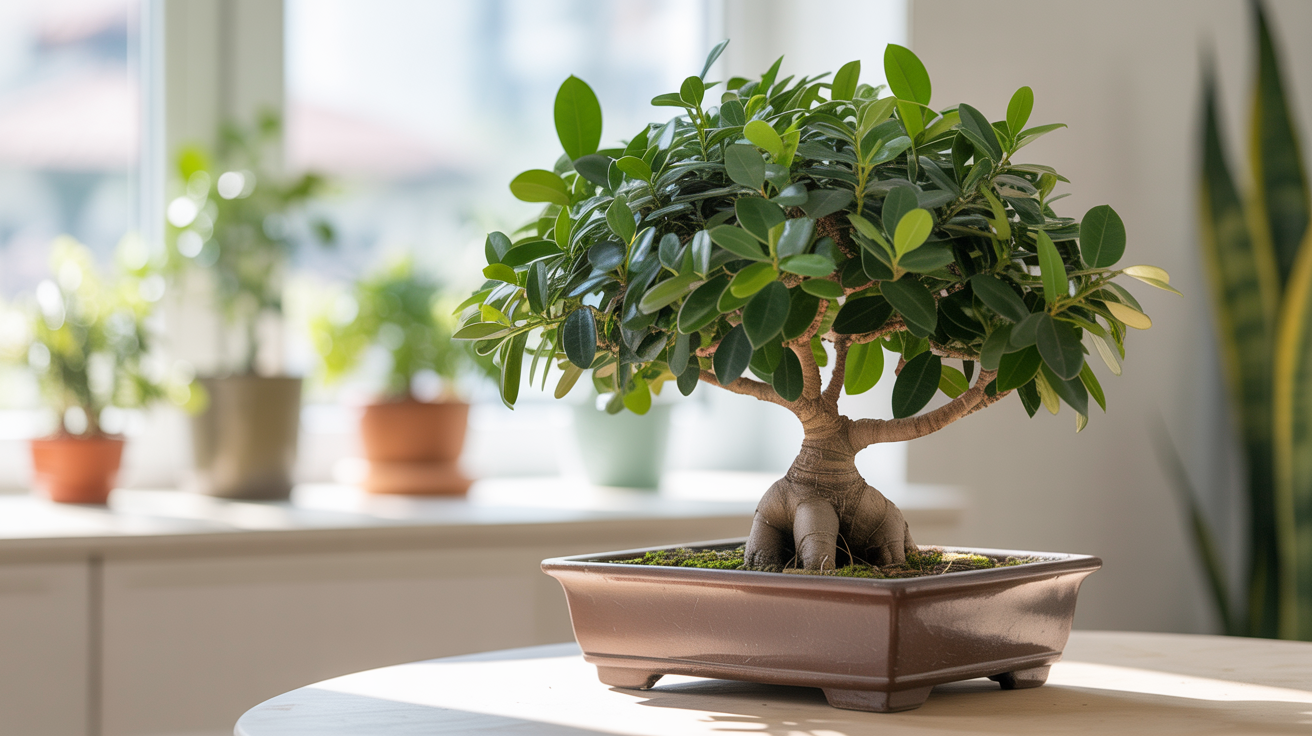
Ficus bonsai are one of the most forgiving trees you can start with. They handle indoor conditions better than most species, bounce back from beginner mistakes, and reward attentive care with a satisfying, tree-like silhouette. If you want to know how to care for a ficus bonsai, the short answer is: consistent light, careful watering, and patience. The longer answer is below.
At a Glance
- Light: the brightest indoor spot you have, ideally south- or west-facing; supplement with a grow light in winter.
- Water: check the soil, don't follow a calendar. Water thoroughly when the top layer feels barely damp to dry.
- Temperature: keep it above roughly 18°C (65°F) year-round; ficus is tropical and has no cold tolerance.
- Repotting: every one to two years for young trees, in spring, trimming back up to a third of the roots.
- Feeding: a balanced liquid fertilizer every two to three weeks in the growing season, skipped for six to eight weeks after repotting.
- Leaf drop after a move is normal. Keep conditions stable rather than chasing the problem by relocating the tree again.
Why ficus works for beginners
Ficus is a genus of about 800 species, but two turn up most often at garden centers: Ficus retusa (also sold as F. microcarpa) and Ficus ginseng, which is the same species trained with a fat, swollen root base. Both respond to the same care. You may also see Ficus benjamina, though it drops leaves aggressively when moved and is harder to settle indoors.
The big selling point is resilience. A ficus bonsai tolerates low humidity and central heating, which is exactly the environment in most homes. North Carolina State Extension notes that Ficus microcarpa is "suitable for temperatures above 68 degrees F all year long, thus it is generally sold as a houseplant," which is a useful way to think about it: treat 18 to 20°C (65 to 68°F) as the floor, not just a rough guideline. It also tolerates occasional overwatering better than junipers or pines do. That said, "tolerates" is not the same as "thrives on neglect." Ficus bonsai kept in dim corners or watered on autopilot still die. It just takes longer.
If you are still deciding which tree to start with, the 10 best bonsai trees for beginners covers ficus alongside other good beginner options, so you can compare.
Light: the single most important factor
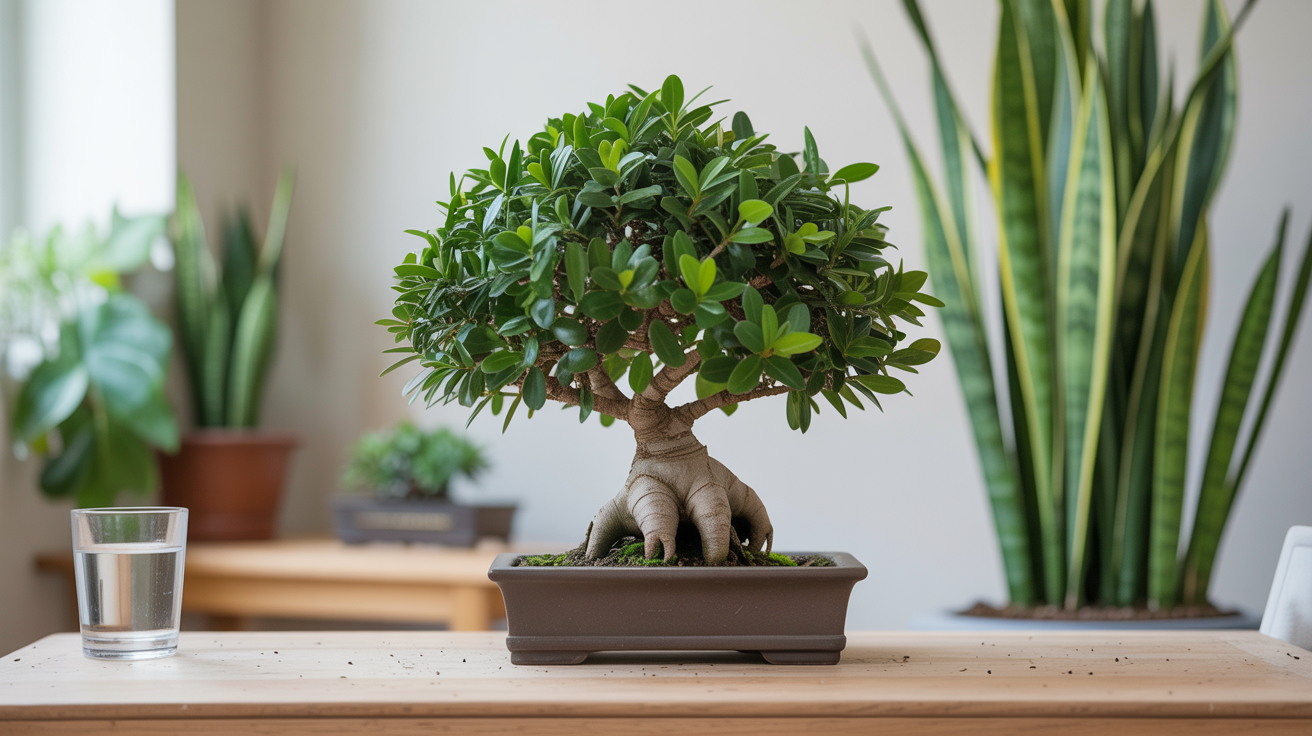
Put your ficus bonsai in the brightest spot available indoors. A south- or west-facing windowsill is ideal. If you can only offer a north-facing window, consider a small grow light to supplement, run for 10 to 12 hours a day.
Ficus reacts badly to sudden changes in light. Moving a tree from a bright nursery shelf to a dim apartment corner often causes leaf drop within a week or two. This is alarming but usually not fatal. Leave the tree in the same spot, keep watering correctly, and new leaves will emerge once it adjusts, usually within two to four weeks. Resist the urge to move it again during that recovery window.
Outdoors works well in summer once night temperatures stay above 15°C (60°F). Ease the tree into full sun gradually over a couple of weeks to prevent leaf scorch, moving it from dappled shade into a few hours of direct sun before leaving it out full time.
Ficus bonsai watering
Ficus bonsai watering is where most beginners go wrong, usually by watering on a fixed schedule rather than by checking the soil.
A practical method: push your finger into the soil up to the first knuckle. If it feels barely moist or dry, water thoroughly. If it still feels damp, wait another day and check again. "Thoroughly" means watering until water runs freely from the drainage holes for several seconds, not a quick splash from above that wets only the top centimeter of soil.
How fast the soil dries out varies a lot by conditions. Use this as a starting point, then adjust based on what you actually see when you check the soil:
| Conditions | Typical watering interval |
|---|---|
| Small pot (15 cm or less), summer heat | Every 1 to 2 days |
| Small pot, spring or autumn | Every 2 to 3 days |
| Larger pot (20 cm or more), summer | Every 3 to 4 days |
| Any pot size, winter, cool indoor temps | Every 5 to 7 days |
| Any pot near a heating vent or radiator | Check daily, it dries fastest |
A few things affect how fast the soil dries out beyond the table above:
- Pot size and material. Small pots and unglazed clay dry faster than large glazed pots.
- Season. Trees in active growth (spring and summer) need more water than those in a slower winter phase.
- Humidity. Dry indoor air from heating or air conditioning speeds evaporation.
Never let the tree sit in a saucer of standing water for more than an hour. Root rot is silent until the roots are already damaged.
Ficus ginseng bonsai care follows the same watering logic. The swollen base stores some moisture, but the fine roots in the soil are just as vulnerable to rot as any other ficus.
Soil, potting, and repotting
Bonsai soil is not ordinary garden compost. It needs to drain quickly while retaining enough moisture to feed the roots. A standard mix for indoor ficus is roughly two parts inorganic grit (pumice or akadama) to one part organic material. Many beginner trees come potted in dense, peat-heavy compost that stays wet too long, sometimes for a week or more after watering. Repotting into a proper bonsai mix makes ficus bonsai watering much easier to manage, since the soil surface and the root zone dry out at closer to the same rate.
Repot young ficus trees every two years; older, slower-growing trees every three to five years. Spring is the right time, just as new growth starts. During repotting, trim back up to one-third of the root mass and work the roots gently to remove old soil with a chopstick or root hook rather than tearing by hand. Pot into a slightly larger pot or back into the same pot with fresh soil.
Pruning and shaping
Pruning is how you develop the bonsai's shape over time. With ficus, this is forgiving because the tree back-buds well. That means even hard pruning rarely leaves bare, dead branches.
For maintenance pruning, cut shoots back to two or three leaves once they have grown six to eight leaves. Use clean, sharp scissors rather than pulling or tearing. Ficus bleeds a white, milky sap when cut. This is normal. Wipe it off if it bothers you, but it is not harmful to the tree.
Structural pruning (removing whole branches to improve the overall shape) is best done in late winter or early spring before the main growth flush. This gives cuts time to callous over during the growing season.
You can also wire ficus branches to guide their direction. Use aluminium wire, wrap it at roughly a 45-degree angle, and check every few weeks. Ficus grows fast enough that wire can cut into bark within a month if you forget about it. Bite through bark is ugly and can leave permanent scars.
For context on how ficus pruning compares to other popular species, the Chinese elm bonsai care guide and the juniper bonsai care guide are good reads. Junipers in particular require a very different approach.
Feeding your ficus
Feed from spring through autumn while the tree is in active growth. A balanced liquid fertilizer (equal parts nitrogen, phosphorus, potassium) every two to three weeks works well, mixed at roughly quarter strength if you are feeding every two weeks, or full strength on the longer three-week gap. Reduce feeding to once a month in winter, or skip it entirely if the tree is growing very slowly.
Do not fertilize a freshly repotted tree for six to eight weeks. The roots need time to recover before they can handle fertilizer salts, and feeding too early can scorch the fine new root hairs the tree needs most.
Signs of over- or under-feeding
| Symptom | Likely cause |
|---|---|
| Pale, yellowish new leaves | Nitrogen deficiency, underfeeding |
| Brown, crispy leaf tips | Fertilizer burn or low humidity |
| Very small leaves with short internodes | Good sign, actually, it means the tree is ramifying well |
| Soft, dark patches on roots | Root rot (overwatering, not feeding) |
| Leggy growth with long gaps between leaves | Too little light, not usually a feeding problem |
Common problems and what to do
Leaf drop. The most common complaint. Usually caused by a change in environment (moving the pot, a cold draught, sudden light change) or inconsistent watering. Keep conditions stable and the tree should recover within two to four weeks.
Yellowing leaves. Could mean overwatering, underwatering, or low light. Check the soil moisture and the amount of light before guessing at a remedy. Yellowing that starts on the oldest, lowest leaves and works upward usually points to a watering or feeding issue rather than light.
Scale insects. Small brown bumps on stems and the underside of leaves. Wipe off with a cotton swab dipped in rubbing alcohol, or use a neem-oil spray every seven to ten days until they clear. Persistent infestations may need a horticultural oil treatment.
Root rot. The tree looks limp and lifeless even when the soil is wet, and leaves may yellow and drop even though you have been watering on schedule. Root rot most often results from excessive standing water around the roots, commonly from overwatering, heavy potting media, or poor drainage, and once it takes hold there is no way to fully reverse the damaged roots, only to stop it from spreading. Remove the tree from the pot, cut away black or mushy roots back to firm white tissue, allow the remaining roots to dry slightly, and repot into fresh, free-draining soil. Catch it early and the tree can recover.
Frequently asked questions
How much light does a ficus bonsai need indoors?
As much as possible. A bright south or west windowsill is ideal. Ficus can survive in lower light but will grow slowly and may drop leaves. If your brightest window is still fairly dim, a simple LED grow light set to run for 10 to 12 hours a day makes a noticeable difference within a few weeks.
How often should I water my ficus bonsai?
There is no fixed schedule. Water when the top layer of soil feels barely damp to dry. In summer this might be every day or two; in winter it might be every five to seven days. Stick your finger in the soil rather than relying on a calendar, and use the watering interval table above as a rough starting point.
Why is my ficus bonsai dropping leaves?
Leaf drop almost always happens because something changed: a new location, a cold draught near a window, irregular watering, or low humidity from indoor heating. Identify the change, stabilize the conditions, and give the tree two to four weeks to recover. Avoid moving it again.
Can I keep a ficus bonsai outdoors?
Yes, but only once temperatures are reliably above 15°C (60°F). Ficus is tropical and will not survive frost, and even a single night near freezing can kill fine roots and defoliate the tree. Move it indoors before the first cold nights in autumn, and expect some leaf drop as it readjusts to indoor conditions.
How do I know when to repot my ficus bonsai?
Look at the drainage holes. If roots are circling densely or pushing out through the bottom, the tree is pot-bound and needs repotting. A healthy, young ficus will usually need repotting every two years. Repot in spring, not autumn.
Does a ficus bonsai need misting or a humidity tray?
It helps but is not essential the way it is for some tropical species. Ficus tolerates the low humidity of most centrally heated homes reasonably well. A humidity tray (a shallow tray of pebbles and water under the pot, not touching the roots) or occasional misting can reduce brown, crispy leaf tips in winter, but it will not fix a light or watering problem, so address those first.
Is it normal for a newly bought ficus bonsai to drop most of its leaves?
Yes, within reason. Moving from a nursery's controlled, bright environment to an average home is a significant shock, and losing a quarter to a third of the leaves in the first few weeks is common. Keep the tree in one stable spot, water correctly, and resist the urge to fertilize or repot immediately. If it is still bare after six to eight weeks with no new growth starting, check the roots for rot.