How to Develop Ramification (Finer Branching)
Learn how to build bonsai ramification with pruning and pinching techniques that encourage denser, finer branching on any species.
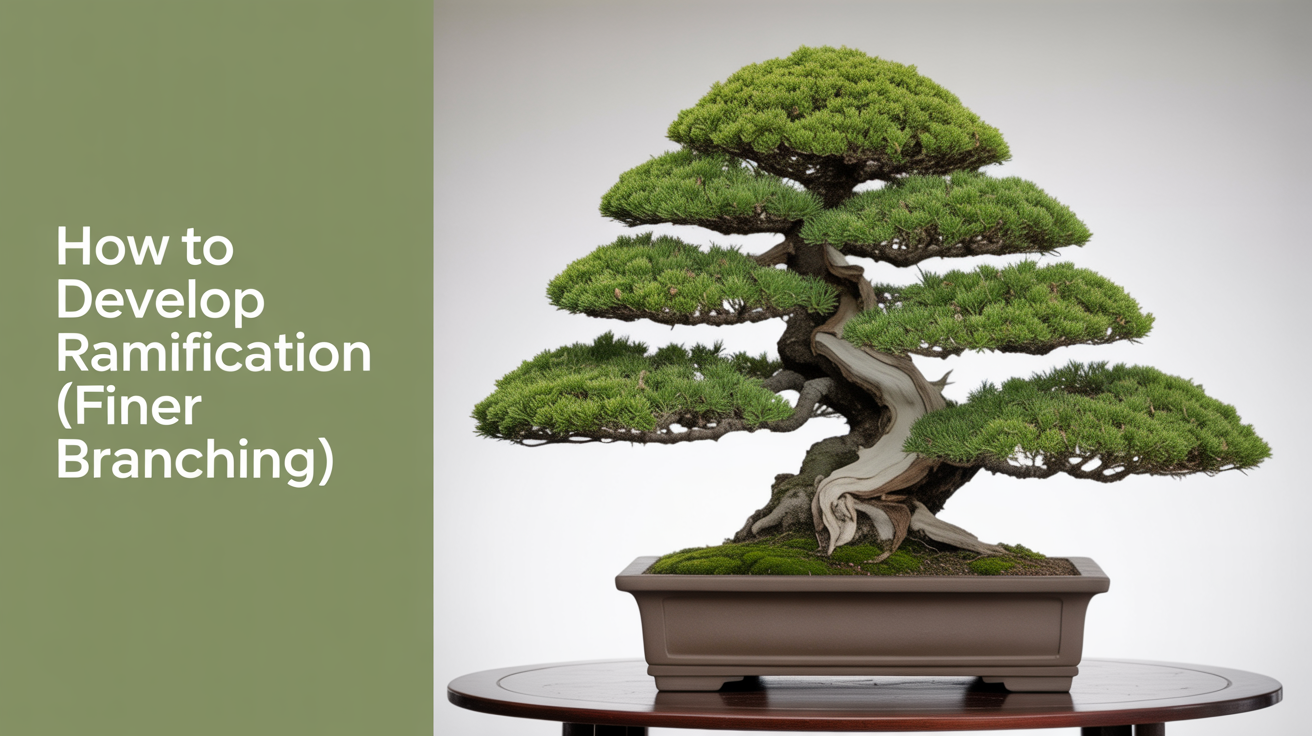
Ramification is the gradual development of many small, refined branches from a few larger structural ones. In a mature bonsai, it creates the aged, dense silhouette that makes even a young tree look as though it has been growing on a windswept hillside for decades. The good news: you do not need years of experience to start building it. You need repetition, timing, and a clear understanding of how trees respond to cuts.
This guide explains the process from structural branches down to the finest twigs, with practical steps suited to beginners.
What Ramification Actually Means
A typical branch on a young collected or nursery tree is thick, long, and bare except at the tips. That is the opposite of ramified. A ramified branch divides repeatedly: one branch becomes two, two become four, four become eight, until the canopy is filled with small divisions that hold fine secondary growth.
Each division point is called a fork, and the angle and position of each fork affects the visual structure of the finished tree. In deciduous species, you can see the entire branch network in winter, which is when ramification really shows. Conifers and evergreens achieve a similar dense look through layered pad growth rather than bare branch silhouettes.
The principle behind building ramification is simple: every time you cut a growing tip, the tree responds by pushing two or more new shoots from buds near the cut. Over several seasons of cutting and regrowth, forks multiply.
Structural Pruning Comes First
Ramification is built on top of structure, not instead of it. Before you can develop fine branching, the main branch positions need to be established and the trunk and primary limbs need adequate girth.
Trying to ramify branches that are still in the wrong position, or on a trunk that is too skinny, locks you into a weak design. A basic rule: prune for structure first, then let the tree grow out during the development phase, then begin working on finer branching once structure is solid.
If you are still sorting out branch placement, start with a beginner's guide to pruning a bonsai tree before diving into ramification.
The Cut-and-Grow Cycle
Ramification is built through repeated cycles of growth and pruning. Here is how a single cycle works in practice:
- Allow a shoot to extend to four to six leaves (or, on conifers, until new needles are about two-thirds the length of the old ones).
- Cut back to two leaves (or two pairs of needles on pines).
- The tree responds with two or more new shoots from buds near the cut.
- Allow those to extend, then cut back again.
- Repeat each growing season.
After two or three seasons of this, a branch that began as a single shoot will have four, eight, or sixteen divisions. The branch nodes will be close together, giving the fine, twiggy look that suggests age.
Speed depends on species and conditions. Fast-growing deciduous trees like Chinese elm, trident maple, or hornbeam can build noticeable ramification in two growing seasons if they are healthy and well-fed. Junipers and pines develop more slowly; the same process may take four or five years.
Timing Matters by Species
Deciduous trees: do your main structural cuts in early spring before buds open, and do the cut-and-grow cycle through the growing season. A second pruning pass in midsummer can push more back-budding on vigorous species.
Junipers: pinch or cut new growth in spring and again if needed in early summer. Avoid heavy pruning in late summer, which can leave wounds exposed heading into dormancy.
Pines: timing depends on the species. Japanese black pine owners work a candle-cutting technique in summer, but for most beginners with pines, leaving a knowledgeable local club or nursery to advise the first couple of seasons is a safer approach.
The Role of Pinching
Pinching is a gentler alternative to cutting, used during active growth to redirect energy without removing significant foliage. You use your fingertips to snap off the soft new growth at the tip of a shoot before it hardens.
This works well for maintaining shape once some ramification already exists. It slows extension growth and encourages the tree to push from existing buds rather than always reaching outward. On maples and elms in particular, summer pinching keeps internodes short, which is what makes branches look refined rather than leggy.
The key distinction to keep in mind: pinching is a maintenance tool, not a ramification-building tool. Heavy ramification development requires proper cuts, not just tip removal. For a closer look at when each approach applies, see maintenance vs structural pruning explained.
For species-specific pinching technique, how to pinch a bonsai for shape without stressing it covers the practical details.
Practical Tips for Faster, Healthier Ramification
| Factor | What to Do |
|---|---|
| Fertilize generously in growing season | Vigorous trees ramify faster than weak ones |
| Keep the tree in good light | Low light = long internodes = leggy branching |
| Use sharp, clean tools | Ragged cuts heal slowly and invite disease |
| Remove inward-growing and crossing shoots early | These clutter the interior and block light |
| Let foliage mass build before cutting again | Leaves power new growth; don't strip the tree |
One thing beginners often get wrong: cutting back too aggressively before the tree is strong enough. A weak tree responds to hard pruning by pushing a handful of desperate shoots rather than the generous back-budding you want. Feed, water, and care for the tree well; the best ramification comes from healthy, energetic growth that you control, not from a struggling tree that you keep cutting.
What to Expect Over Time
In the first season, you will mostly be choosing branch positions and removing anything that conflicts. Ramification work is secondary.
In the second season, once structure is cleaner, you start the cut-and-grow cycles in earnest. You will begin to see the branch count multiply, though the shoots will still be fairly coarse.
By the third or fourth season on a healthy deciduous tree, the branching will begin to look genuinely refined. Fine twigs will fill the canopy silhouette, and in winter or on a leafless display, the branch network will be visible and interesting in its own right.
This timeline assumes good conditions. A tree that is repotted into well-draining bonsai substrate, fed through the growing season, and given appropriate light will develop faster than one sitting in heavy garden soil in poor light.
Frequently Asked Questions
How many seasons does it take to get good ramification? On fast-growing deciduous species like Chinese elm or trident maple, two to three active growing seasons of consistent cut-and-grow cycles produce visible ramification. Junipers, pines, and slower deciduous species need longer. There is no shortcut: the tree has to physically grow new shoots and harden them into branches, which takes time regardless of what you do.
Can I build ramification on a young tree? Yes, and in some ways a young tree is easier because you are shaping the branch structure from the beginning rather than trying to correct an established one. The important thing is to let the tree build energy and mass before cutting back hard. A tree that is still establishing its roots should be allowed to grow relatively freely for its first season or two in a pot.
What is the difference between ramification on deciduous trees and conifers? Deciduous trees develop visible individual branch divisions that show clearly in winter. The goal is a dense, twiggy silhouette with many fork points. Conifers, particularly junipers and spruce, develop pad-like foliage clouds. The underlying branching is still being built through similar cut-and-grow principles, but the visual effect is a layered, cloud-like canopy rather than a bare branch network.
Why are my new shoots going in the wrong direction after I cut? Buds tend to grow from just behind where you cut, and their direction is partly determined by which buds were already present on the shoot at the time you cut. To steer new growth, cut just above a bud that is pointing in the direction you want the next branch to go. This takes some practice but becomes more intuitive once you start reading the bud positions before making each cut.
My tree isn't back-budding after I prune. What's wrong? Back-budding depends on the tree having sufficient stored energy. If the tree is weak from overwatering, poor soil drainage, insufficient light, or a recent root problem, it may not push new buds reliably. Before cutting again, let the tree recover: move it to better light, check that the soil drains freely between waterings, and feed it through the growing season. Healthy trees back-bud readily; struggling ones do not.