Maintenance vs Structural Pruning Explained
Learn the difference between maintenance and structural pruning in bonsai, when to do each, and how beginners can use both without harming their tree.
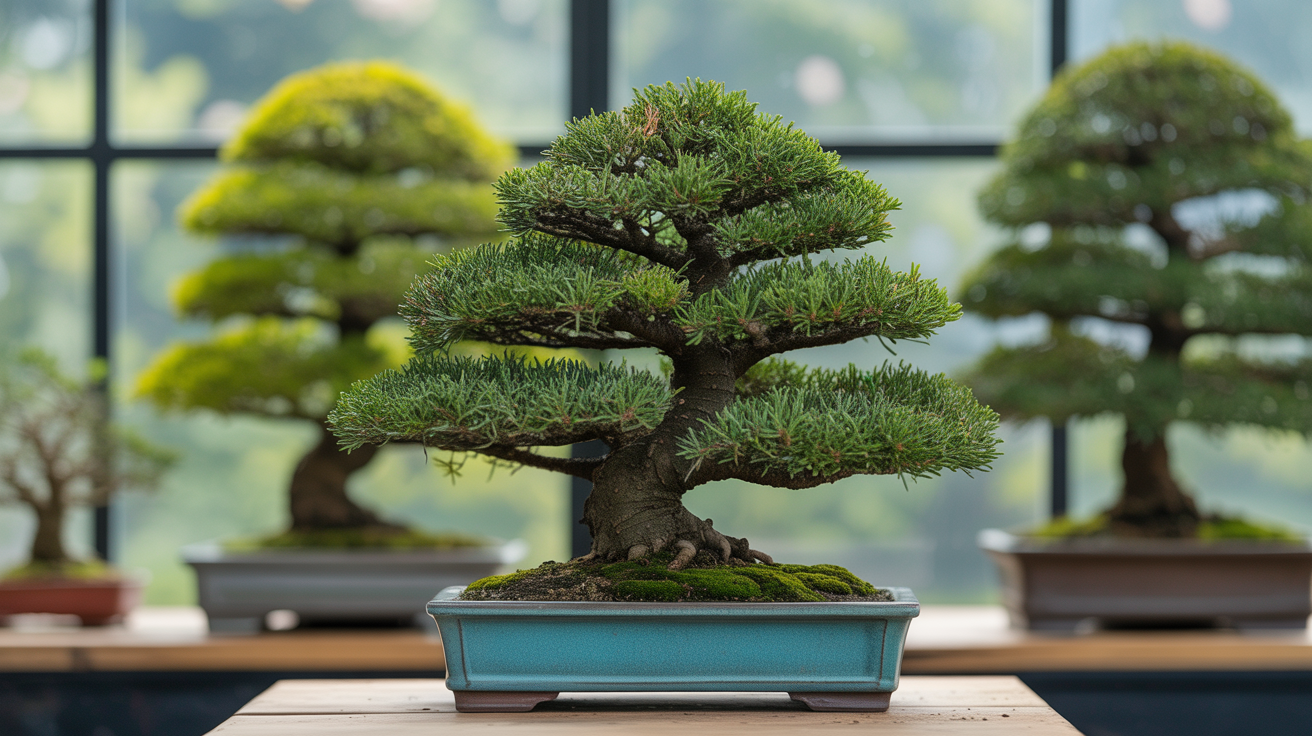
Most beginners pick up a pair of scissors and start snipping without knowing which type of pruning they're actually doing. That confusion can lead to a tree that looks tidy on the surface but never develops proper shape, or one that gets cut back so hard it struggles to recover.
There are two main types of bonsai pruning: maintenance pruning and structural pruning. They have different goals, different timing, and different tools. Understanding both makes every cut more intentional, and intentional cuts are how good bonsai happen.
At a Glance
- Maintenance pruning manages new growth within an already-established shape. Do it lightly, often, through the growing season.
- Structural pruning decides the tree's fundamental shape: trunk line, primary branches, and taper. Do it rarely, usually once a year or less.
- Timing matters most for structural cuts. Late winter or very early spring, just before buds swell, is the standard window for temperate deciduous trees.
- Take no more than a third of the foliage at once, whether pruning for maintenance or structure, or the tree can struggle to recover.
- A weak, stressed, or recently repotted tree is not a good candidate for heavy structural work. Get it healthy first.
- Wound paste on big structural cuts is mostly about keeping the site moist and encouraging even callusing, not a strict medical necessity on every species.
What maintenance pruning is
Bonsai maintenance pruning (also called refinement pruning) is the ongoing work of keeping a tree tidy and healthy throughout the growing season. You're not changing the tree's basic shape. You're just managing new growth so the design you've already built doesn't get overgrown.
Typical maintenance tasks include:
- Removing shoots that grow straight up or straight down (called "sacrifice shoots" once you're done with them)
- Cutting back long extending shoots to two or three leaves once they've pushed four or six
- Removing crossing branches at the inner canopy that block light from the lower pads
- Pinching the tips of new growth on pines or junipers to control elongation
- Snipping off any wire-biting branches before the wire cuts into the bark
The goal is density and proportion. A branch that's allowed to extend unchecked will thicken faster than the rest of the tree and throw off the taper, sometimes noticeably within a single growing season. Regular light trimming redirects the tree's energy into ramification, which is the fine network of smaller branches that makes a bonsai look old and convincing. A single maintenance session usually removes well under a tenth of the tree's total foliage; if you find yourself taking off much more than that in one sitting, you've drifted into structural territory.
For most deciduous trees, this kind of pruning happens throughout the active growing season, roughly spring through early autumn. Tropical species that grow year-round can be maintained almost any time, though you'll trim less in winter. Conifers follow their own patterns, which is worth researching by species.
See how to pinch a bonsai for shape without stressing it for more on the lighter end of maintenance work.
What structural pruning is
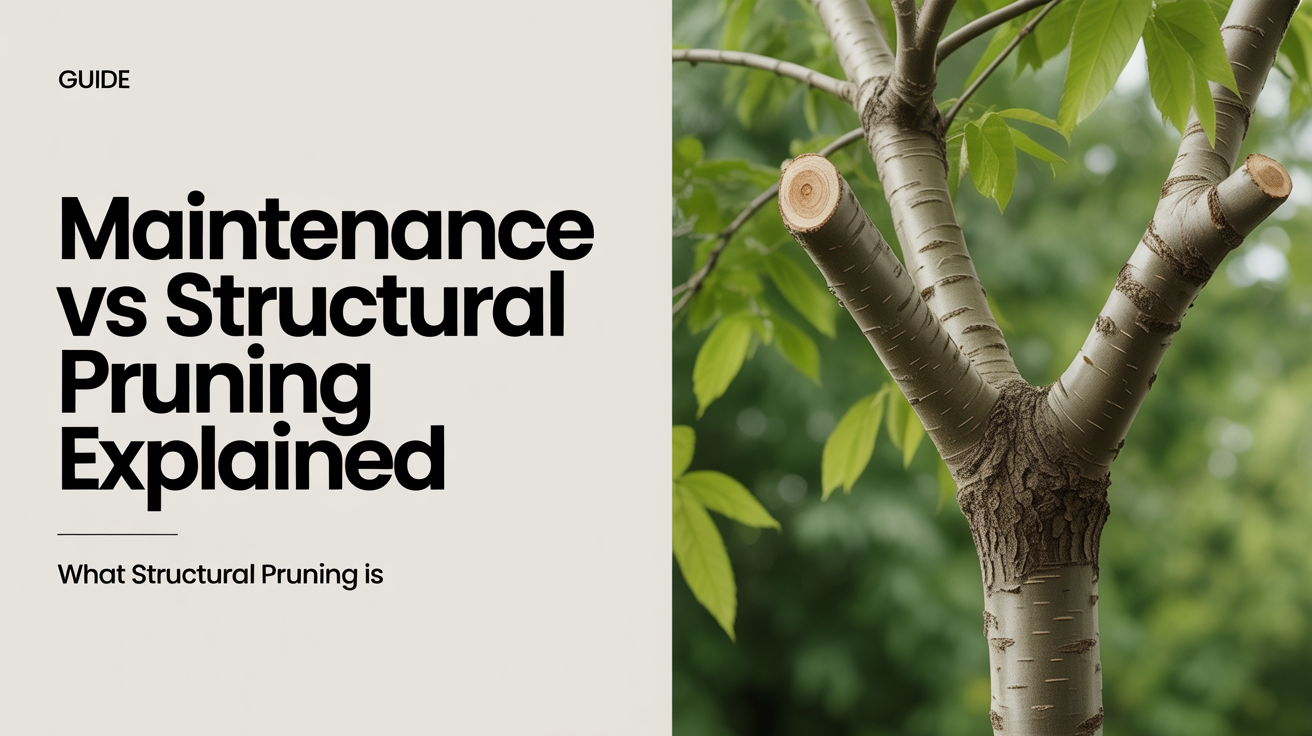
Structural pruning is the heavy lifting. This is where you decide the tree's fundamental shape: which branches stay, which come off entirely, and where you want movement and taper to develop. It's the kind of work that might remove a third or more of the tree's volume in a single session.
Because it's so taxing on the tree, timing matters a lot. The general rule for most temperate deciduous trees is late winter or very early spring, just before buds begin to swell. University of Minnesota Extension recommends the late dormant season for most pruning because the tree hasn't leafed out yet, which makes branch structure easy to see, and stored energy is about to move into new growth as soon as cuts are made. For conifers and tropicals, the timing window shifts, sometimes to late spring after the first flush hardens off. Always check what suits your specific species before cutting.
Structural pruning decisions include:
- Choosing the front of the tree and the primary movement of the trunk
- Removing any branch that competes visually with the trunk line
- Selecting and shortening the first, second, and third branches
- Cutting back "sacrifice" branches that have done their job of thickening a section of trunk
- Making large concave cuts to help wounds heal flat rather than leaving ugly knobs
Large cuts benefit from wound paste or cut putty on the site. This is worth being precise about, because general arboriculture research doesn't fully back up wound dressing as a healing aid: the same UMN Extension guidance notes that wound dressing is not normally needed on pruning cuts for most landscape trees, since a healthy tree seals a clean cut on its own. Bonsai practice differs slightly because of scale and stakes. A cut putty layer on a large bonsai wound keeps the exposed tissue from drying out and cracking on a pot-grown tree with a much smaller root reserve than a landscape tree, helps the callus ring close evenly on a cut that will be scrutinized up close for years, and on disease-prone species reduces the entry point for pests while the wound is fresh. Sharp, clean tools matter here more than anywhere. A ragged cut heals slowly, and on a fine bonsai that shows up years later as a textured scar rather than a smooth one.
If you want to go deeper on the mechanics of cutting, the beginner's guide to pruning a bonsai tree covers tools, angles, and technique in more detail.
How the two types work together
Think of structural pruning as architecture and maintenance pruning as upkeep. You wouldn't repave the foundation every time you mow the lawn. In the same way, structural pruning happens maybe once a year on an established tree, sometimes less. Maintenance pruning is a regular part of every growing season.
A newly collected or purchased tree might need a meaningful structural session before it gets any maintenance work at all. There's no point refining shoots on a branch that should have been removed six months ago. Get the bones right first, then refine.
Here's a simplified overview of how the two compare:
| Maintenance pruning | Structural pruning | |
|---|---|---|
| Goal | Maintain shape and density | Define or redesign the tree's structure |
| Frequency | Every few weeks during growing season | Once or twice a year, or less |
| Timing | Active growing season | Dormancy or just before spring growth |
| Typical volume removed | Under 10% of foliage per session | Up to a third of total volume |
| Tools | Scissors, concave cutters for small branches | Concave cutters, branch cutters, saw |
| Wound care | Usually not needed | Wound paste on larger cuts, cosmetic and protective |
| Recovery time | Days, barely noticeable | Weeks to a full growing season |
| Risk level | Low | Higher, needs care and planning |
A note on beginners and structural work
Many beginners are told to wait years before doing any structural pruning. That's not always the best advice. A tree in a bad starting shape that never gets structural attention will just get harder to fix as branches thicken.
That said, structural pruning on a weak or stressed tree is genuinely risky. A tree that's been recently repotted, is fighting pests, or hasn't recovered from previous stress is not a good candidate for heavy cuts. Learn to read your tree. Full, healthy foliage, active growth, and a pot that's been stable for at least a season are good signs the tree can handle the surgery.
Start modest. You can always cut more later. You can't put a branch back.
How back-budding fits in
One reason structural pruning works so well in late winter is that hard cuts often release apical dominance and trigger dormant buds lower on the branch or trunk to wake up. This is back-budding, and it's one of the main ways bonsai artists develop branch pads and ramification from scratch.
Understanding what back-budding is and how to encourage it helps you plan structural cuts more deliberately. Instead of just removing what you don't want, you start to see where new growth might appear and how to take advantage of it.
Frequently asked questions
Can I do maintenance pruning and structural pruning at the same time?
You can, but it's not usually a good idea to do heavy structural work and detailed refinement in the same session. Structural pruning already stresses the tree. Adding a lot of smaller cuts on top of that increases the load. Better to do your structural work, let the tree stabilize and push new growth, then come back for refinement once it's clearly healthy.
How do I know which branches to remove in structural pruning?
Look for branches that cross in front of the trunk (they block the design), branches that grow straight toward the viewer or straight away, branches at the same height on opposite sides of the trunk (called "bar branches"), and any very thick branch that competes with the trunk for dominance. On a young tree, you're also looking for which branches have the best movement and taper to build on.
What tools do I need for each type?
For maintenance pruning, a good pair of bonsai scissors or a small trimming shear handles most work. For structural pruning, you'll want proper concave cutters for branches up to pencil thickness, and knob cutters or a small saw for anything larger. Sharp tools are not optional, they're safety equipment and they heal the tree faster.
Does maintenance pruning affect the tree's health?
Done correctly, it actually supports health. Removing congested inner growth improves airflow and reduces the risk of fungal issues. It also redirects energy from a few long shoots into many shorter ones, which is what builds fine ramification. The one way it can hurt a tree is if you overdo it and strip too much foliage at once, especially in late summer when the tree needs reserves going into autumn. Take no more than a third of the foliage at any one time.
My tree has a branch I want to remove but I'm not sure if it's too late in the season. What should I do?
If it's a relatively small branch and the tree is actively growing and healthy, you can usually remove it almost any time. The concern is mainly with very large cuts on weakened trees. When in doubt, mark the branch, keep managing it lightly through the season, and take it off in late winter when conditions are ideal. A few extra months won't ruin the design, and a badly timed heavy cut can set a tree back a full year.
Do I really need wound paste, or is it just tradition?
It's genuinely useful on bonsai even though general tree-care research downplays it for landscape trees. The difference is scale: a bonsai wound is exposed for years on a small tree with limited root reserves, and a smooth, even callus matters for how the trunk looks later. Use it on cuts larger than a pencil's width; skip it on small maintenance snips, where it does little and just makes a mess.
How long before I can prune the same branch again after a structural cut?
Give the tree at least one full growing season to push new growth and stabilize before making another heavy cut nearby. Light maintenance trimming of the resulting new shoots can start once they've hardened off, usually within a few weeks, but a second structural round on the same area is better held for the following dormant season.