How to Pinch a Bonsai for Shape Without Stressing It
Learn the bonsai pinching technique — what it is, when to do it, and how to keep your tree healthy while refining its shape.
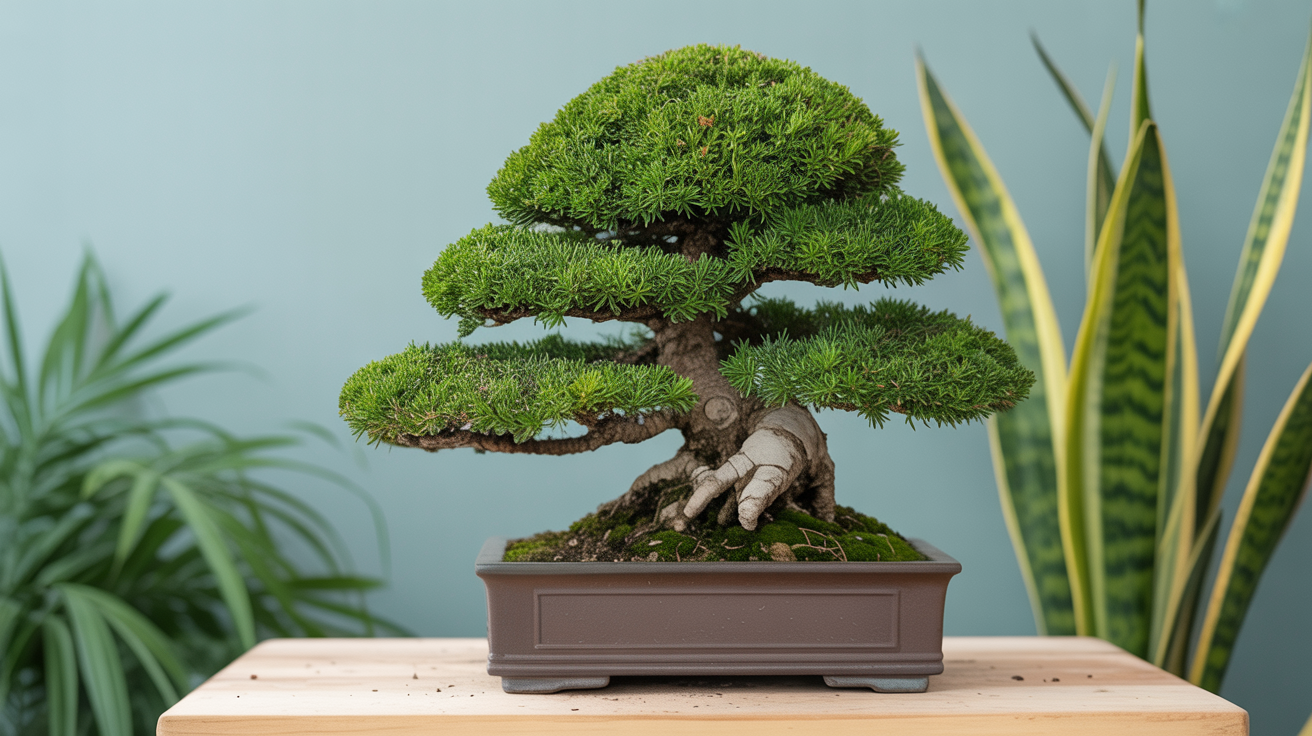
Pinching a bonsai is one of the gentlest things you can do to it. No scissors, no blade, no wound. You simply use your fingertips to remove the softest, newest growth before it has a chance to harden. Done at the right moment, pinching keeps your tree compact, encourages finer branching, and avoids the stress that heavier pruning can cause.
If you just got your first tree and you're wondering whether those extending shoots need attention, this guide is for you.
What pinching actually means
Pinching is the removal of soft, actively growing shoot tips using your fingers rather than a cutting tool. You are not removing a branch. You are not shortening a thick stem. You are intercepting a flush of new growth before it draws energy and elongates beyond where you want it.
The result is that the bud breaks further back on the branch, producing two or more new shoots in place of the single one you removed. Over seasons, this builds the dense, fine branch structure that makes a bonsai look like a mature tree in miniature.
Because you are only touching immature tissue, the tree does not need to seal a wound the way it would after a cut. That is why pinching is considered low-stress when it is done at the right time.
Pinching vs cutting bonsai: which to use when
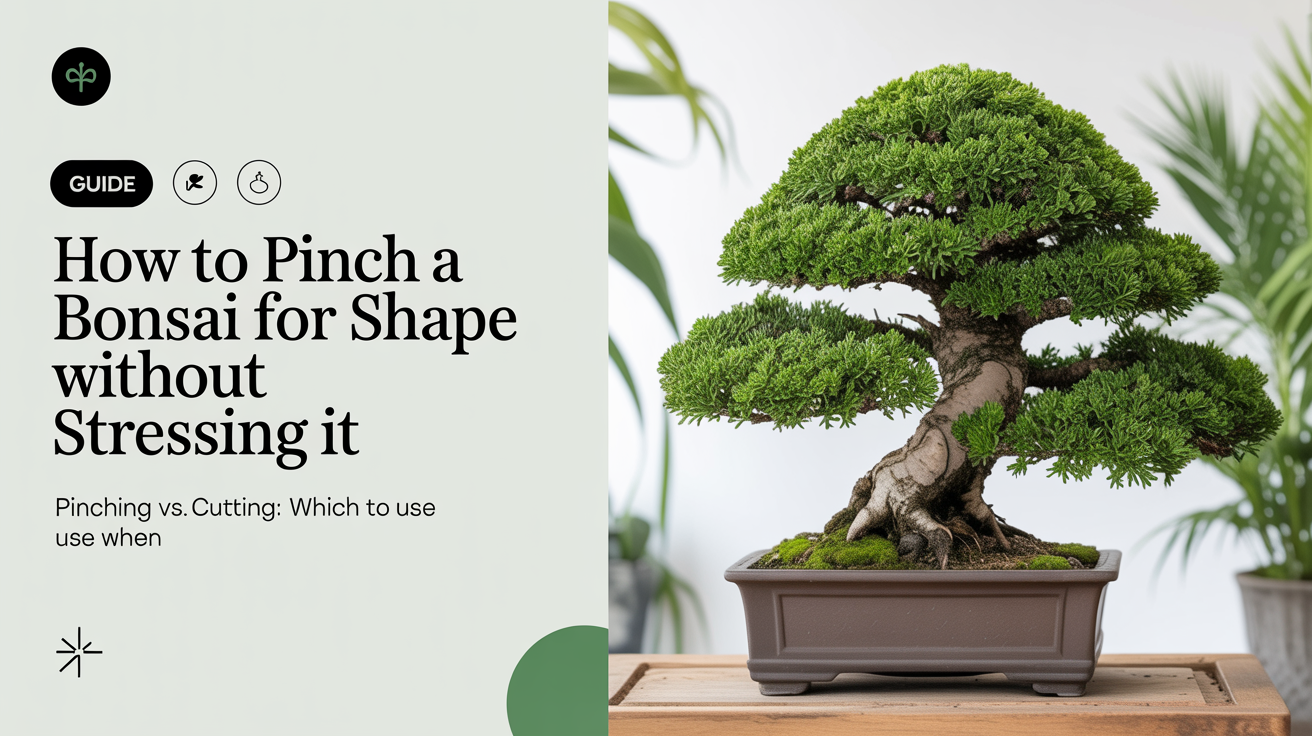
This is where beginners often get confused. Both tools shape a tree, but they work at different stages of growth and do different jobs.
Pinching is for active, soft growth during the growing season. The tissue is green, pliable, and hasn't yet formed woody bark. You can remove it cleanly between your thumbnail and index finger. This is ongoing maintenance work, done multiple times per season.
Cutting is for thicker, woody material, branches you want to remove entirely, or significant shortening you do during the tree's dormant or semi-dormant period. For a fuller picture of when and how to cut, the guide on maintenance vs structural pruning explains the distinction in depth.
A useful rule of thumb: if you need a blade, you have probably waited too long for pinching to apply.
When to pinch back bonsai
Timing matters more than technique. Pinch too early and there is nothing substantial to remove. Pinch too late and the shoot has already hardened, meaning you'll need scissors and the tree will need to recover from a cut.
The moment to pinch is when a new shoot has extended two or three internodes beyond the silhouette you want and the tip still feels soft between your fingers. For most temperate deciduous trees, this happens repeatedly from spring through midsummer. For tropical species kept indoors, new growth can flush year-round, so you may find yourself pinching in any month.
Some species have a concentrated spring flush followed by a rest, then a second push in late summer. Junipers, for example, push in spring and again in late summer or early autumn. Pinching during both flushes keeps them tighter than a single annual trim ever would.
A note on timing by species type
| Species type | Peak pinching window | Frequency |
|---|---|---|
| Deciduous (maple, elm, hornbeam) | Spring through early summer | Every 2-4 weeks during flush |
| Evergreen conifer (juniper, pine) | Spring candle extension | Once per flush; pines are slightly different (candle pinching) |
| Tropical (ficus, fukien tea) | Whenever new growth extends past silhouette | Year-round as needed |
| Flowering/fruiting (azalea, crabapple) | After flowering, before bud set | Once, carefully |
Azaleas and other flowering species need careful attention: pinch after the flowers drop but before the tree sets buds for next year's bloom, or you will remove next season's flowers.
How to pinch back bonsai: step by step
You do not need any tools for this. Clean hands are enough.
- Look at the shoot you want to address. Count the internodes (the gaps between pairs of leaves). If the shoot has extended two to four nodes beyond the compact silhouette you're aiming for, it's ready.
- Hold the branch steady with one hand just below the point you want to keep.
- With the thumbnail and index finger of your other hand, grip the soft tip and roll it off cleanly. You should feel almost no resistance. If it resists, use scissors instead rather than tearing.
- Check that you have left at least one or two healthy leaf pairs below the pinch point. These will fuel the back-budding response.
- Work around the whole tree, not just one area. Uneven pinching produces uneven growth.
That is the whole technique. It takes a few seconds per shoot once you know what to look for.
What the tree does next
After pinching, the tree redirects energy back toward the remaining buds lower on the branch. This often triggers back budding, where dormant buds along older wood activate and produce new shoots. Over time, this is how a bonsai builds the tight, layered ramification that gives the illusion of an ancient tree.
Do not expect dramatic results from a single session. The cumulative effect of consistent pinching over two or three seasons is what reshapes a tree.
Common pinching mistakes beginners make
Pinching a stressed tree. If your tree has dropped leaves, shows pale color, or is recovering from repotting, leave it alone. Pinching takes energy. A stressed tree needs to conserve what it has.
Removing too much at once. Pinching is not a substitute for full pruning. If large sections of the tree are far out of shape, do a proper structural prune first (see the beginner's guide to pruning a bonsai tree), then let the tree recover before starting regular pinching maintenance.
Using fingernails on thicker shoots. Once a shoot has started to lignify, tearing it with a fingernail damages the vascular cambium beneath. Use sharp scissors and make a clean cut.
Pinching at the wrong season. Pinching in late autumn or winter on a deciduous tree disrupts the tree's preparation for dormancy. Wait until growth resumes in spring.
Pinching the same spot repeatedly without letting the tree respond. If you pinch a shoot tip before any new growth emerges from that branch, you are just removing potential without gaining anything. Give the tree two to four weeks to push new buds, then assess.
Keeping your tree healthy through the growing season
Pinching works best when the tree is in good health to begin with. A few things that support a tree through active pinching:
- Water consistently. A tree pushing new growth is using water faster than one at rest. Check soil moisture daily in warm weather.
- Keep it in good light. Weak light produces weak, etiolated growth that pinches poorly and doesn't ramify well.
- Feed lightly during the pinching season. Heavy nitrogen fertilizer encourages exactly the kind of aggressive shoot extension you are trying to slow down. A balanced or low-nitrogen feed is better through summer.
- Don't repot and aggressively pinch in the same season. Repotting already asks a lot of the root system. Let the tree stabilize for a season before heavy pinching work.
None of this is complicated. It just means paying attention to your tree as a living thing rather than treating it like a craft project.
Frequently asked questions
Can I use scissors instead of my fingers for pinching bonsai?
Yes, especially if the shoot tip has started to firm up or if your thumbnail tends to crush rather than snap the tissue cleanly. Small bonsai scissors work well. The goal is a clean separation, not a crush or tear. Fingers are simply faster and gentler when the growth is very soft.
How much should I pinch off?
Remove back to two or three leaf nodes from the tip, leaving at least one healthy pair of leaves below the pinch point. You want to maintain some foliage on every branch to support photosynthesis and fuel the response.
Will pinching hurt my bonsai?
Not when done correctly on healthy, actively growing trees. Pinching is the least invasive form of shaping. The risk comes from pinching at the wrong time (late autumn), on a stressed tree, or removing so much that a branch loses all its foliage. Work conservatively at first.
My tree doesn't seem to be growing new shoots after I pinch. What's wrong?
A few possibilities: the tree may need more light to push back-buds, the soil may be staying too dry or too wet, or the tree may be in a natural rest period between flushes. Check the basics before assuming something is wrong. Tropical species kept in low light indoors are the most common culprit here.
Is pinching the same for all bonsai species?
Broadly yes, but timing and frequency differ. Pines, for example, use a specific technique called candle pinching where you remove part of the new candle (the extending shoot before needles open) to balance energy across the tree. It follows the same principle but requires a bit more understanding of how pines distribute vigor. For your first tree, focus on getting the timing right for your specific species before worrying about variations.