How to Fix a Leggy or Overgrown Bonsai
Learn how to rescue an overgrown bonsai with targeted pruning, back-budding, and patience. A plain-language guide for beginners.
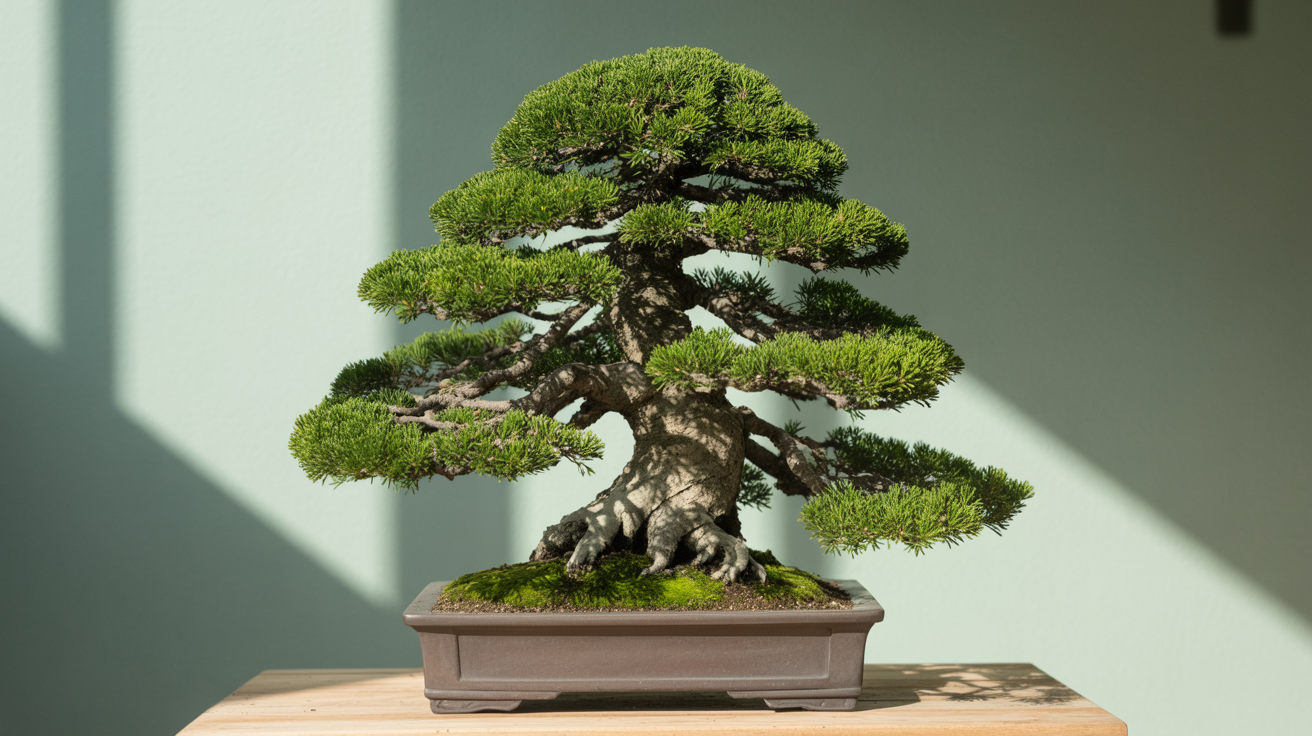
An overgrown bonsai is not a ruined bonsai. Most of the time a tree that has shot out long, bare branches or turned into a tangled mass just needs a clear pruning plan and a little time to recover. This guide walks you through how to assess the damage, where to cut, and how to coax new buds back toward the trunk so the tree looks like a bonsai again.
What "Leggy" Actually Means
A leggy bonsai is one where energy has moved strongly toward the branch tips, leaving the lower or inner sections bare. The result looks rangy: long, whippy growth with foliage only at the ends, and a trunk that is mostly hidden by crossing branches going nowhere useful.
This happens for a few common reasons:
- The tree was left unpruned through one or more full growing seasons.
- It was repotted into a very large container that encouraged fast, unrestricted growth.
- It spent time in low light, which causes many species to reach hard for more sun.
- The grower (understandably) felt nervous about cutting, so nothing got cut.
Knowing the cause matters because it tells you what to fix alongside the pruning. A tree that went leggy in low light will go leggy again if you just prune and move on.
Assess Before You Cut
Spend five minutes looking at the tree from every angle before picking up shears. You are trying to answer three questions:
Where is the foliage? Foliage only at the tips suggests you will need heavy cutback. Foliage scattered along the branches gives you more flexibility.
Are there any back-buds? Back-buds are small dormant buds sitting on older wood, closer to the trunk. Run a finger gently along a bare branch and look for tiny green or reddish bumps. If you can see even a few, the branch can push new growth once you cut past the tip dominance.
What is the silhouette you want? Sketch it mentally or on paper. A rough triangle (taller in the center, tapering toward the sides) works for most beginner styles. Knowing the target shape prevents you from cutting the wrong branch first.
How to Cut Back an Overgrown Bonsai
Choose the right season
Timing matters more for some species than others, but the general rule is: prune broadleaf deciduous trees in late winter before bud break, or in early summer just after the first flush of growth hardens off. Prune tropical and subtropical species (ficus, jade, schefflera) at any point in the active growing season when the tree is healthy. Conifers are trickier and have their own windows, so check species-specific advice before cutting.
Cut in stages, not all at once
Removing more than about a third of the foliage in a single session stresses most trees significantly. For a heavily overgrown tree, plan two or three sessions spread over one growing season instead of one dramatic chop. In the first session, remove dead, crossing, and downward-growing branches, then step back and see what you have before going further.
Where to make each cut
Cut just above a node, leaf, or bud that points in the direction you want new growth to go. Angle the cut slightly away from the bud so water runs off rather than sitting on the wound. On thicker branches (pencil-width or larger), use a cut-paste or wound sealant to protect against drying and infection.
For a leggy branch with no foliage except at the tip, look for the lowest back-bud you can find, then cut just above it. If there are no visible back-buds at all, you can still cut the branch back hard on many species, then wait to see what pushes. Ficus, Chinese elm, and most maples are reliable back-budders. Junipers are not, so be more conservative with them.
Seal and observe
After cutting, place the tree in a sheltered spot with good indirect light for a week or two. Avoid heavy fertilizing immediately after a hard cutback. Once you see new buds pushing, you can move the tree back to its usual position and resume normal feeding.
Encouraging Back-Buds After Cutback
Back-budding is how a tree fills in bare inner branches. You cannot force it, but you can encourage it:
- Increase light. Many species back-bud more readily when moved to a brighter position.
- Reduce tip dominance by pinching the newest growth at the branch tips. This signals the tree to activate dormant buds further back.
- Keep the tree well-watered and fed with a balanced fertilizer once it has recovered from the pruning session.
- Be patient. Some species take a full season to show meaningful back-budding. Do not assume a branch is dead just because nothing has appeared after four weeks.
For more on the mechanics of how cuts influence growth direction, our beginner's guide to pruning a bonsai tree covers the fundamentals in detail.
Maintenance After Rescue
Once the tree starts filling in, the goal shifts from rescue to maintenance. This is where many beginners repeat the same cycle: they let the tree go again because it looks good and they do not want to disturb it.
Ongoing shape work does not have to be drastic. Pinching for shape is gentle, done with fingertips rather than shears, and keeps new growth from racing too far before you can redirect it. Done regularly through the growing season, it prevents the leggy pattern from coming back.
It also helps to understand that there are two distinct kinds of pruning. The work you did during rescue falls under structural pruning, which changes the tree's branch structure. Keeping the tree tidy going forward is maintenance pruning, which is smaller and more frequent. Understanding the difference between the two makes it much easier to know which tool to reach for and when.
Frequently Asked Questions
Can I cut an overgrown bonsai all the way back to the trunk? On some species, yes. Ficus, Chinese elm, and many tropicals tolerate a hard cutback to a bare trunk and will push new growth from dormant buds. On conifers like juniper, cutting past all green foliage usually kills the branch permanently, so you cannot take that approach. Know your species before doing anything drastic, and do a staged cutback rather than removing everything at once whenever possible.
My bonsai has long bare branches with foliage only at the very tips. Can those branches be saved? Often, yes, but it depends on whether the bare wood still has viable back-buds. Cut back to just above the lowest visible bud, increase light, and wait a full season. If no new growth appears by the end of the season, the branch may be past saving, at which point you can remove it entirely and let a healthier branch take its place.
How long does it take to fix a leggy bonsai? For light legginess, one good pruning session followed by consistent maintenance can produce visible improvement within a single growing season. For a severely overgrown tree, plan on two to three years of patient work before the structure looks the way you want it. That is not bad news; a tree that has recovered properly is often stronger and more compact than one that was never overgrown.
Is it normal for leaves to drop after a hard pruning? Some leaf drop is normal after significant pruning, especially on deciduous species. The tree is redistributing resources. Keep it well-watered and in good light, avoid repotting at the same time as a hard cutback, and new growth should appear within a few weeks. If the entire tree defoliates and shows no new growth for several months, something else may be wrong.
Should I repot an overgrown bonsai at the same time as pruning it? Generally no. Root pruning and foliage pruning both stress the tree, and doing both simultaneously can be too much. Address the most urgent issue first. If the tree is heavily rootbound AND severely overgrown, tackle the roots at the appropriate season (usually early spring for most species), let it recover for a season, then do the structural pruning. If the pot is adequate, prune the foliage first and save repotting for the following year.