How to Pick a Healthy Bonsai at the Nursery
Learn how to choose a bonsai tree at the nursery. Spot healthy signs, avoid common pitfalls, and leave with a tree that's set up to thrive.
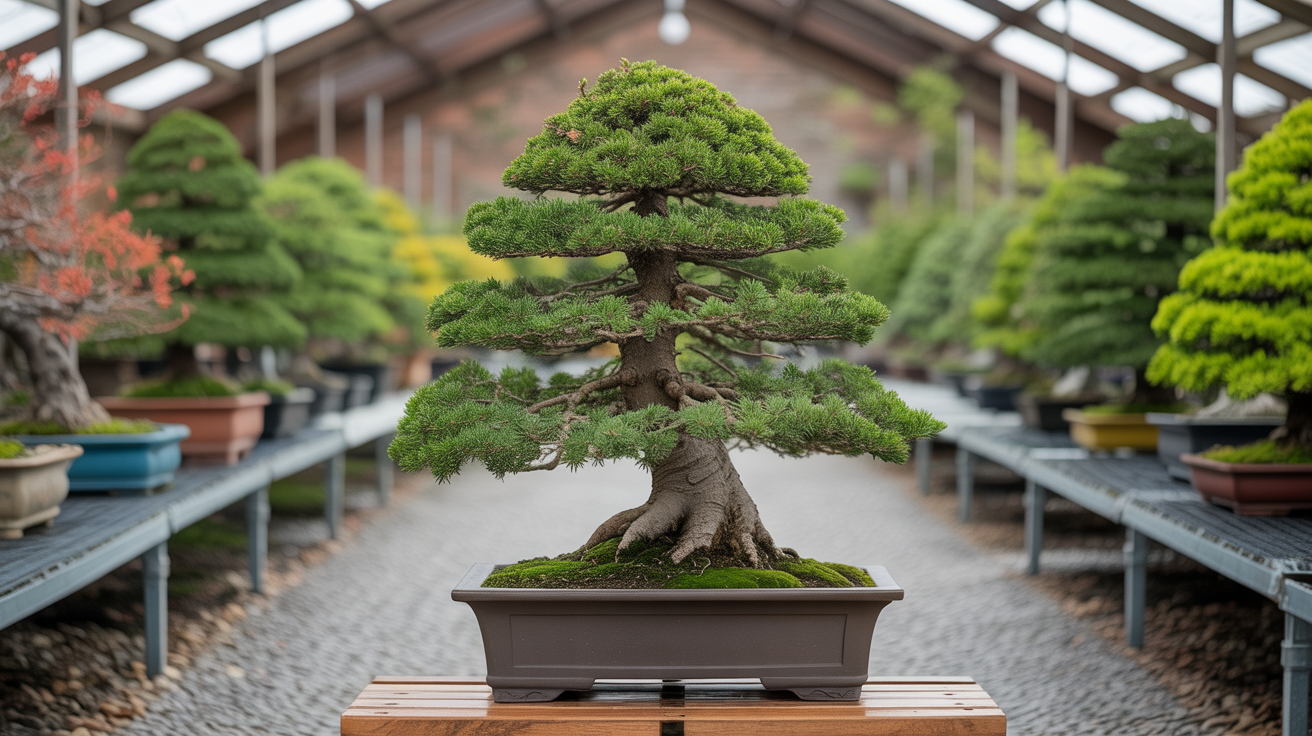
Walking into a nursery and staring at rows of bonsai can feel overwhelming. Most shelves hold a mix of trees: some thriving, some quietly stressed, and a few that have been sitting too long in bad soil. Knowing what to look for before you buy saves you from dragging home a struggling tree and spending weeks wondering what went wrong.
This guide walks you through how to choose a bonsai tree that is genuinely healthy, not just photogenic on the shelf.
Start With Your Environment, Not the Tree
Before you lift a single pot off the shelf, ask one question: where will this tree live?
Outdoor species like juniper, Japanese maple, and Chinese elm need real seasons and open air. Indoor-tolerant species like ficus or jade can handle a windowsill. Buying a juniper for an apartment with no balcony, or a tropical ficus for an unheated garage, sets you up for a frustrating experience regardless of how healthy the tree looks.
If you are unsure which species suits your setup, start with the 10 best bonsai trees for beginners before you shop. Matching the tree to your conditions is more important than any other factor.
How to Read the Foliage and Branches
Once you have a species in mind, foliage tells you a lot about a tree's recent history.
What healthy foliage looks like:
- Leaves are firm, evenly colored, and appropriate for the species (glossy on ficus, needled on juniper, small and matte on Chinese elm)
- New growth is present or recently finished, indicating the tree has been actively developing
- No yellowing at the interior of the canopy, which often signals light starvation or overwatering
Red flags to look for:
- Leaves that feel papery or drop when you gently brush the canopy
- Widespread yellowing or browning at leaf edges (can indicate salt buildup, underwatering, or root stress)
- Dead branches that snap cleanly and show no green under the bark when scratched lightly with a fingernail
One dead twig is not a crisis. A tree with three or four dead sections scattered through the canopy has been through something, and you should walk away unless you are comfortable with a recovery project.
For species-specific foliage cues, the ficus bonsai care for beginners guide covers what healthy ficus leaves look and feel like in detail.
Inspect the Roots and Pot
The pot reveals information the foliage sometimes hides.
Gently check whether the tree is stable in its pot. A bonsai should not rock or feel loose. If it wobbles, the root system may be underdeveloped or recently disturbed.
Look at the drainage holes. Healthy roots are white to light tan and firm. Brown, mushy roots visible at the drainage hole suggest the tree has been sitting in waterlogged soil. A light grayish-white fuzz at the drainage hole can be normal mycorrhizal activity, but dark slime is not.
If the nursery allows it, check the surface soil. It should feel slightly damp but not saturated, and the top layer should be intact, not cracked and pulling away from the pot edge. Cracked, compacted surface soil that is bone dry in the center suggests the tree has been underwatered repeatedly.
Roots that are circling dramatically or escaping over the pot rim in thick mats are a sign the tree is overdue for repotting. This is not automatically a dealbreaker, but factor it into your decision.
Check the Trunk and Nebari
The trunk and surface roots (nebari) are what give a bonsai its character over time.
Run a hand along the trunk. It should feel solid and smooth or appropriately textured for the species. Soft spots or sunken sections can indicate rot, especially near the base where soil and trunk meet.
Look at the base. A trunk that flares naturally into the soil is called nebari, and it is a quality that takes years to develop. A trunk that goes straight into the pot like a fence post is less developed but perfectly fine for a beginner's first tree.
Scars from older pruning cuts are normal and often desirable. But wounds that are still raw, weeping sap heavily, or showing signs of rot deserve a closer look before you buy.
Questions to Ask the Nursery Staff
A good nursery will answer these directly:
| Question | Why It Matters |
|---|---|
| How long has this tree been at the nursery? | Trees sitting for many months may have been neglected or mislabeled |
| Is this an indoor or outdoor species? | Critical for where you can actually keep it |
| When was it last watered? | Tells you if the tree is on a consistent schedule |
| Has it been recently repotted? | Freshly repotted trees need low-stress conditions for several weeks |
| What species is this exactly? | "Bonsai" is not a species; generic labels on pots often indicate mass-produced stock |
If staff cannot answer the species question, that is useful information. Mass-produced supermarket bonsai are often poorly labeled and may have been grown in conditions that make long-term care harder to dial in.
Practical Tips for the Actual Shopping Trip
Bring a phone and take photos of each tree you are seriously considering. It is easy to lose track of details when you are looking at ten trees in a row.
Turn the pot slowly and look at the tree from multiple angles. A flat front view can hide a bare back, a trunk with a problematic lean, or a branch structure that only looks balanced from one direction.
If the nursery has more than one specimen of the species you want, compare them side by side. The difference between a tree that has been well managed and one that has been neglected becomes obvious when they are next to each other.
For Chinese elm bonsai, which is one of the most forgiving beginner species, look specifically for fine ramification (thin, dense branching) and avoid specimens where most branches are thick with very little secondary growth.
Finally, resist the urge to buy the most elaborate, heavily styled tree on the shelf. Simpler trees with good trunk taper and a healthy root system give you more to work with and are easier to care for while you are still learning.
Frequently Asked Questions
Is it okay to buy a bonsai that has already lost some leaves?
Partial leaf drop can be normal for deciduous species going into dormancy or adjusting to a new environment. Check the branches for green wood underneath the bark. If the branches are alive and the root system is solid, a tree that has dropped some leaves is usually recoverable. Avoid trees with dead branches throughout the canopy or a loose, unstable root mass.
How do I know if a bonsai is worth the price?
Price in bonsai reflects age, species, and the quality of training. An older tree with a thick trunk and refined ramification costs more because it represents many years of work. For a beginner, a younger, less-trained tree at a lower price is often the better starting point. You will learn more and feel less anxious about making mistakes on a tree that is not a significant financial investment.
Can I buy a bonsai online instead of at a nursery?
Online purchases are possible, but you lose the ability to inspect the tree before it arrives. If you go this route, order from a specialist who photographs individual trees (not stock photos), provides care notes, and ships with care. Avoid marketplace listings with no species detail or that use the word "bonsai" as a species name.
What if the nursery only has one specimen of the species I want and it has some problems?
Ask whether more stock is expected and, if so, when. Most specialty nurseries rotate inventory regularly. If you are set on a specific species, waiting a few weeks is usually better than buying a stressed tree and spending months nursing it back.
Does the pot matter when choosing a bonsai at the nursery?
The training pot a nursery tree comes in is often temporary and will be replaced eventually. Focus on the tree, not the pot. The exception is if the pot is clearly too small or has no drainage holes, which can indicate poor management practices at the nursery overall.