What Is Back-Budding and How to Encourage It
Learn what bonsai back budding is, why it matters for beginners, and practical techniques to encourage new buds closer to the trunk.
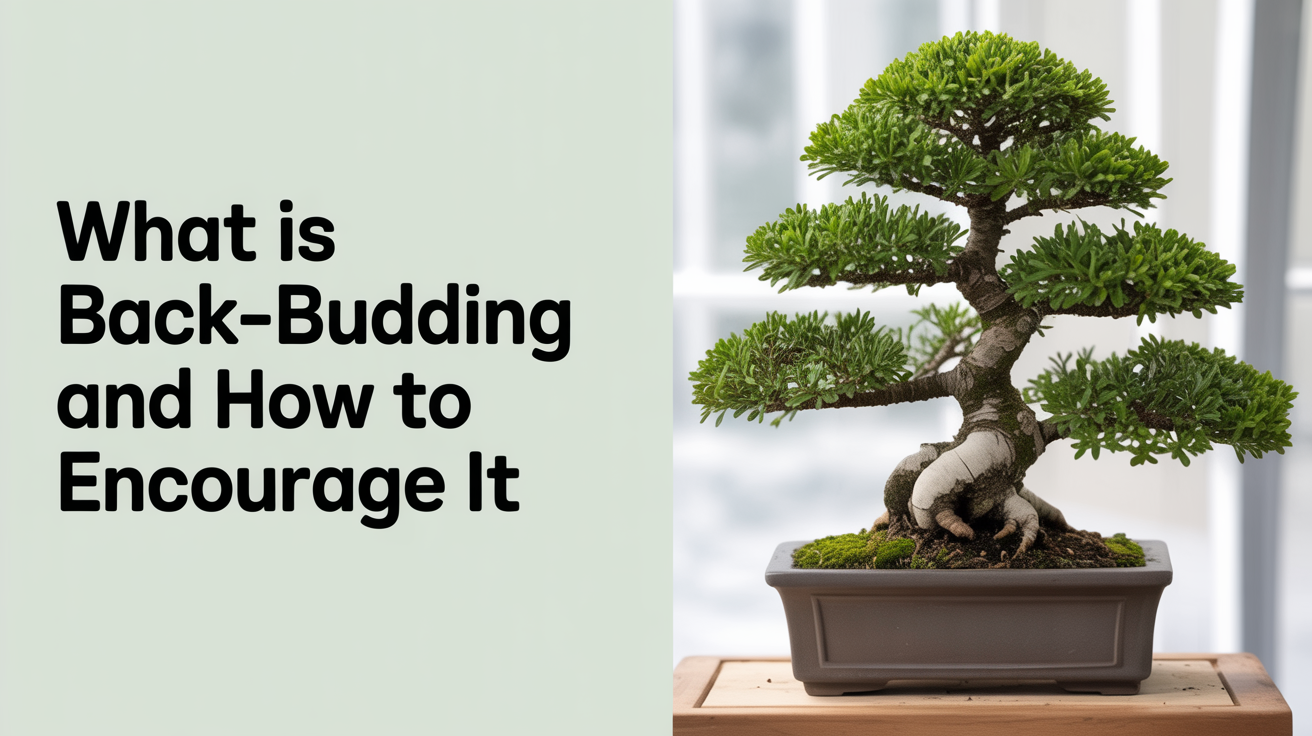
Back-budding is one of those bonsai concepts that sounds technical but is actually a beginner's best friend. In short, it's when a tree sprouts new growth from old wood, from branches or even the trunk itself, well behind the tips where new growth normally appears. For bonsai, this is a big deal. It gives you more places to attach branches, lets you build density closer to the trunk, and saves trees that have grown too leggy or bare in the wrong spots.
If your tree looks like a row of tufts at the ends of long bare sticks, back-budding is what fixes that.
What back-budding actually means
New shoots almost always appear at the tips of branches. The growing tip (called the apical meristem) produces hormones that travel down the branch and suppress buds lower down. This is called apical dominance, and it's the reason an unpruned tree gets longer and longer without filling in.
Dormant buds sit along older wood the whole time. They just don't activate because those tip hormones tell them not to. Back-budding happens when that suppression is removed, either by pruning the tip away, by stressing the tree lightly through techniques like defoliation, or simply because the tree is healthy and vigorous enough to push energy into older wood anyway.
The new growth appears from tiny buds that were always there, hidden just under the bark. You'll see a small green swelling, then a tiny shoot that you can eventually train into a new branch.
Not every species back-buds easily. Junipers, maples, elms, ficus, azaleas, and many other common bonsai species do it reliably when healthy. Some conifers, like most pines, back-bud more selectively and need species-specific timing. If you're unsure about your tree, a local bonsai club is worth asking.
Why it matters for beginners
Most beginners end up with a tree that's too sparse near the trunk. It happens fast: you buy a young nursery tree, the long branches look fine, but over a season or two you realize the inner part of the canopy is bare while all the growth is out at the tips.
Getting new buds to form closer to the trunk lets you rebuild the branch structure without starting from scratch. It also gives you options. Good bonsai design depends on branches in the right places. A back-bud appearing exactly where you needed a branch is one of the satisfying moments in this hobby.
Beyond that, back-budding is a signal your tree is healthy. A sick or stressed tree rarely pushes growth onto old wood. If you're seeing back-buds appear on their own, you're probably doing something right.
How to encourage new buds on your bonsai
There are several back-budding techniques you can combine, but none of them work well on a weak or unhealthy tree. Get the basics right first: appropriate light, regular watering, and the right soil. Then you can apply these methods.
Prune back the tips
The most direct technique. When you remove a branch tip, the hormonal suppression stops, and dormant buds lower on the branch can activate. This is why regular pruning for bonsai maintenance tends to produce denser growth over time.
Cut back to a point where you want new growth to appear. Don't cut further than that, or you'll lose the branch altogether. For most deciduous species, you can do this through the growing season. For conifers, timing matters more, spring is usually safer.
Defoliate in the right season
Removing leaves from a healthy deciduous tree in early to mid-summer triggers the tree to push new buds, because it suddenly needs new leaves. This is a moderate-stress technique. Done on a weak tree, it can cause serious decline. Done on a strong, well-fed tree in summer, it often produces a flush of back-buds across older wood.
Full defoliation is more advanced. A gentler version is partial defoliation, removing leaves from stronger outer branches while leaving inner branches alone. This redirects energy inward, where you want it.
Increase light to the inner canopy
Dormant buds respond to light as well as to the absence of tip hormones. If the inner canopy is always shaded by outer branches, back-buds that do form may not develop into shoots. Thinning outer growth slightly lets light reach older wood and encourages inner buds to push.
This is one reason maintenance pruning differs from structural pruning. Maintenance cuts keep the canopy open; structural cuts reshape it. Both support back-budding by preventing the outer growth from monopolizing all the tree's resources.
Feed generously during the growing season
Back-budding takes energy. A well-fertilized tree is far more likely to push growth onto old wood than an underfed one. Use a balanced fertilizer through spring and early summer. Some growers switch to a lower-nitrogen feed in late summer to harden off growth before winter, but the key phase for back-budding is spring through midsummer.
Don't overfeed a newly repotted tree, give it a few weeks to settle before pushing with fertilizer.
Consider not pinching everything
Pinching new tips is useful for refining shape, but if you pinch every single extending shoot the moment it appears, you remove some of the energy the tree would otherwise channel toward filling in older wood. Letting a few shoots extend a little longer before cutting back can help drive more vigorous back-budding. You don't have to let them run wild, just don't be too quick on every shoot.
Timing and species notes
| Species type | Best time to work for back-budding | Notes |
|---|---|---|
| Deciduous (maple, elm, hornbeam) | Spring through early summer | Defoliation in early summer; tip pruning most of the season |
| Tropical (ficus, fukien tea) | Any time if kept warm | Year-round growing season; respond well to tip pruning |
| Juniper | Spring, before summer heat | Back-buds on old wood; avoid heavy work in peak summer |
| Pine (two-flush, e.g. black pine) | Candle-pulling in spring | Species-specific; needs study before attempting |
| Azalea | After flowering | Prune right after blooms fade; back-buds form through summer |
These are starting points. Your climate, your tree's health, and how it's been treated before all factor in. When in doubt about timing, lean toward doing less rather than more.
What to do once a back-bud appears
Don't cut it off by accident during routine maintenance. This sounds obvious, but small back-buds are easy to miss. Get in the habit of looking at old wood when you inspect your tree.
Let the new shoot grow freely for a while. It needs to extend, develop leaves, and build some strength before you can start shaping it. Pinching it too early can kill it. Once it has several nodes and looks sturdy, you can begin directing its growth.
If the new shoot is in a useful position for your design, protect it. If it's growing in an awkward direction or is clearly never going to fit the design, you can remove it without losing sleep about it.
Frequently asked questions
How long does it take to see back-buds after pruning?
It depends on the species and the time of year. On a healthy deciduous tree pruned in spring, you might see new buds within two to four weeks. On a conifer, it can take longer, or you may see buds appear the following spring. If several months go by with no activity, the branch may not have viable buds remaining, or the cut was made past a point where buds existed.
My tree isn't back-budding at all. What am I doing wrong?
The most common reasons are poor health, insufficient light, or wrong timing. A tree that's been underwatered, sitting in dense shade, or recently repotted is unlikely to back-bud readily. Rule those out first. Some species also naturally back-bud less than others, a few conifers are genuinely reluctant, and that's normal.
Can I force back-budding on very old, thick branches?
Sometimes. Heavy trunk chops and hard cutbacks on old wood can trigger back-buds on deciduous trees, especially species like maples and elms. This is more of an advanced technique because the cuts are large and the tree needs good aftercare. It works best on healthy trees in early spring.
Is defoliation safe for a beginner's tree?
It can be, if the tree is strong. The rule most experienced growers use: only defoliate a tree that's been healthy for at least a full growing season and is clearly vigorous. If your tree struggled through last summer or is just getting established, skip defoliation this year and focus on building health instead.
Will back-budding happen on its own without any intervention?
Yes. A healthy, well-lit, well-fed tree will often produce back-buds on its own, especially in spring. The active techniques above just increase the frequency and let you direct where the new growth appears. If you're seeing spontaneous back-buds already, it's a good sign you don't need to do much more than keep up with your care routine.