How to Start Bonsai: A Complete Beginner's Guide
Learn how to start bonsai for beginners with this step-by-step guide covering species, tools, soil, watering, and your first pruning.
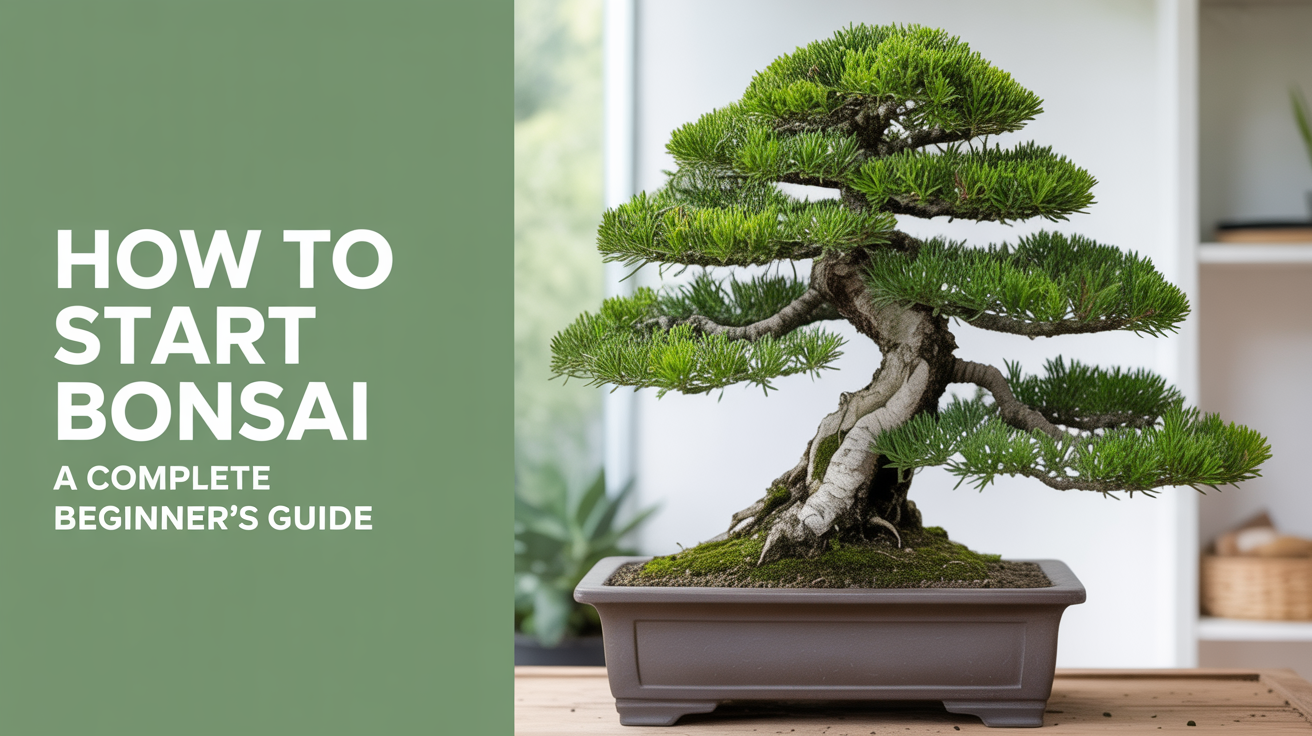
You don't need years of training or a Japanese garden to start bonsai. What you need is a suitable tree, a bit of patience, and an honest understanding of what the practice actually involves. This guide covers everything you need to know to begin bonsai at home, from choosing your first tree to keeping it alive through the first season.
If you want more background on what you're signing up for, what bonsai really takes as a beginner is worth reading before you spend any money.
What bonsai actually is (and isn't)
Bonsai is the practice of growing a tree in a small container while shaping it to look like a mature, windswept, or aged version of its wild counterpart. The tree is real and living. It is not a houseplant that happens to be small, and it is not a permanently miniaturized species. Any tree can technically be grown as bonsai, but some are far more forgiving than others for beginners.
The goal is not to keep the tree alive. Any competent gardener can do that. The goal is to train the tree over time so that it develops character: interesting branching, a thick trunk, a convincing sense of age. That takes years, which is why people who do bonsai tend to find it absorbing rather than frustrating. The timeline shifts your relationship to the work.
What kills beginner trees most often is not bad pruning. It is the wrong environment. A tropical species sitting indoors in a drafty room, or an outdoor juniper brought inside because it "looks nice on the shelf" will decline slowly and die. Getting the placement right matters more than anything else in your first year.
Choosing your first tree
This is the single most important decision you will make as a beginner. The wrong species in the wrong hands is a dead tree within six months.
Outdoor trees
Most conifers and deciduous trees need to be outside year-round. They require seasonal change, winter dormancy, and direct sunlight. Good beginner choices include:
- Japanese maple (Acer palmatum): beautiful leaf shape, forgives moderate watering errors, stunning autumn colour
- Juniper (Juniperus): the classic bonsai species, extremely popular for a reason; tolerates heavy pruning and wiring
- Chinese elm (Ulmus parvifolia): fine twiggy growth, semi-evergreen in mild climates, one of the most resilient beginner trees available
Indoor trees
True indoor bonsai are tropical or subtropical species that cannot tolerate frost. They do not need winter dormancy. Common beginner-friendly options:
- Ficus (Ficus retusa or F. microcarpa): tolerates low light better than most, forgiving of irregular watering
- Jade plant (Crassula ovata): technically a succulent, slow but forgiving, good for learning the basics without constant watering
- Fukien tea (Carmona retusa): attractive small leaves, does well on a bright windowsill in a warm room
The decision between indoor and outdoor comes down to your living situation more than your preferences. If you live in a flat with no outdoor space, an outdoor juniper is not a realistic choice. Read through indoor vs outdoor bonsai for beginners if you are not sure which direction to go.
Where to buy your first tree
Avoid garden centres and supermarkets unless you know exactly what you are looking at. Many "bonsai" sold in those settings are mislabelled, root-bound, or in conditions that have already damaged them. A specialist nursery or a reputable online supplier gives you a much better starting point. A healthy tree costs more than a distressed one, but it is dramatically cheaper than replacing a dead one.
Tools and equipment you actually need
You do not need an extensive toolkit to start. Buy the basics, use them for a year, then decide what else the work requires.
The genuinely necessary items for getting started with bonsai:
| Item | Why you need it |
|---|---|
| Concave branch cutters | Leave a clean hollow wound that heals flush; essential for removing branches |
| Bonsai scissors | Precise tip trimming and leaf work; a standard pair will handle most beginner tasks |
| Wire cutters | For removing training wire without pulling it off (which damages bark) |
| Training wire | Aluminium wire in 1mm, 1.5mm, and 2.5mm covers most beginner wiring work |
| Bonsai soil mix | Free-draining aggregate mix; standard potting compost holds too much water and kills roots |
| A suitable pot | With drainage holes; proper bonsai pots add to the aesthetic but any draining container works to start |
Watering cans with a fine rose head help with gentle, even watering without displacing soil. A small sieve is useful when preparing soil mixes. Everything else can wait.
For a more detailed breakdown of what is worth buying and what to avoid, essential bonsai tools for beginners covers the full list with honest notes on what you will actually use.
Soil and repotting basics
Bonsai soil is not regular potting compost. Standard compost holds moisture well, which is fine for pot plants but disastrous for bonsai roots in shallow containers. Roots need oxygen as much as water. Compacted, waterlogged soil causes root rot, and root rot is slow and invisible until the tree suddenly declines.
The standard approach is to use a free-draining aggregate mix. Common components include:
- Akadama: a Japanese fired clay that holds some moisture and nutrients while draining freely; softens over time and eventually needs replacing
- Pumice: volcanic rock, excellent drainage, adds aeration
- Coarse grit or lava rock: purely structural, prevents compaction
A basic mix for beginners is roughly equal parts akadama and pumice with some grit. Pre-mixed bonsai soils are widely available and perfectly adequate for starting out.
Repotting is done to refresh the soil and prune the roots, not because the tree has outgrown its pot. Frequency depends on the species and age of the tree. Young, fast-growing trees may need repotting every one to two years. Older, slower trees can go three to five years between repots. Always repot in early spring, before new growth pushes.
Watering, light, and placement
These three things kill more beginner trees than anything else combined.
Watering
Water when the top centimetre of soil starts to dry out. Push a finger into the soil; if it feels dry at your fingertip, water thoroughly until it drains from the bottom of the pot. Do not water on a schedule. Water based on what the soil is actually doing, which changes with temperature, humidity, season, and the size of the pot.
Overwatering is more common than underwatering in beginner bonsai. The symptoms look similar (yellowing leaves, decline), which makes diagnosis tricky. If in doubt, let the soil dry slightly more than you think it should before watering again.
Light
Outdoor trees need direct sun for much of the day. Junipers and maples placed in dappled shade will weaken over time. Put them somewhere they get genuine morning sun at minimum.
Indoor trees need the brightest spot available, typically a south or west-facing window. Supplemental grow lights help significantly in rooms that do not get direct winter sun.
Placement
Do not bring outdoor trees inside for aesthetic reasons. Junipers, maples, and elms need outdoor temperatures, humidity, and airflow. Keeping them on a kitchen table for a week can cause dieback that takes months to recover from.
Indoor trees can move outside in summer, which often improves their growth considerably. Just acclimatise them gradually to avoid leaf scorch.
Your first pruning and wiring
Pruning in your first year should be conservative. The goal is to remove crossing branches, trim back shoots that are getting too long, and start thinking about the shape you want to develop. You are not sculpting a finished tree; you are learning how your tree responds to cuts.
Use clean, sharp tools. Blunt scissors tear bark rather than cutting it cleanly, which invites disease. Wipe blades with alcohol between trees if you are working with multiple species.
Wiring lets you reposition branches by wrapping aluminium wire around them and bending them gently into the angle you want. The wire holds the branch in place while it sets, which takes weeks to months depending on the species and the thickness of the branch. Check wired branches regularly. Wire that bites into bark leaves permanent scarring.
For your first year, focus more on understanding your tree's growth patterns than on dramatic shaping. Watch which branches grow fastest, where new buds form, how the tree responds to being cut back. That knowledge is what makes bonsai work.
Frequently asked questions
How long does it take to create a proper bonsai?
It depends on what you mean by "proper." A tree that looks genuinely old and refined takes ten to twenty years of patient development. But a tree that is interesting, healthy, and recognisably trained as bonsai can happen in three to five years, especially if you start with nursery stock that already has some trunk girth. You are not racing to a finish line; the development is the point.
Can I keep a bonsai indoors all year?
Only if it is a tropical or subtropical species, such as ficus or fukien tea. Temperate species including junipers, elms, and maples need to go through winter outdoors. Keeping them inside year-round disrupts their dormancy cycle and weakens them over time. Many die within two to three years of being kept permanently indoors.
How often should I fertilise my bonsai?
During the growing season (spring through early autumn for outdoor trees), feed every two to three weeks with a balanced fertiliser. In late summer, switch to a low-nitrogen formula to help harden the current year's growth before winter. Stop feeding when the tree goes dormant. Indoor trees can be fed year-round at a reduced rate.
Why are the leaves on my bonsai going yellow?
Yellow leaves have several causes: overwatering, underwatering, low light, root problems, or natural seasonal change in deciduous trees. Work through the basics first. Check the soil moisture, the amount of light the tree is getting, and when it was last repotted. If none of the obvious causes fit, take a photo of the tree and soil to a local bonsai club or specialist nursery for a second opinion.
Do I need a special pot to start?
No. Any container with drainage holes works for learning. The shallow, wide pots associated with bonsai do matter aesthetically and improve airflow to roots, but a beginner tree growing in a plain nursery pot is fine for the first year or two. Buy a proper pot when you have a clearer sense of the shape the tree is developing, so the pot can complement it.