Jade Bonsai Care for Beginners
Learn jade bonsai care: watering, light, soil, pruning, and repotting for beginners. Keep your dwarf jade thriving with this practical guide.
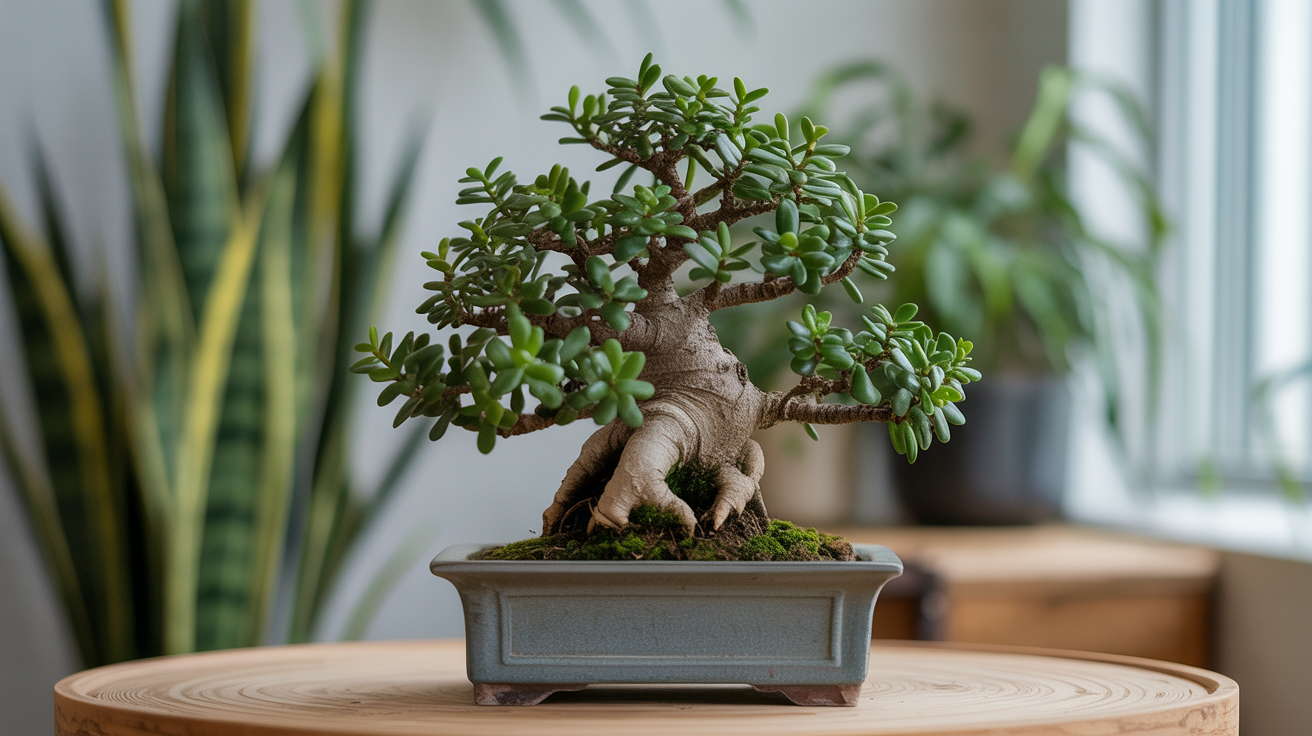
Jade bonsai are about as forgiving as bonsai trees get. If you've been nervous about killing a tree, jade is a solid place to start. It tolerates some neglect, thrives indoors, and bounces back from mistakes that would finish off a juniper or maple.
That said, "forgiving" doesn't mean "indestructible." There are a handful of things that reliably kill jade bonsai for beginners, and this guide will walk you through all of them before they become a problem for you.
What makes jade a good beginner tree
Jade (Crassula ovata) is a succulent native to South Africa. It stores water in its thick leaves and fleshy stems, which is exactly why it tolerates irregular watering better than most bonsai species. The leaves stay small and glossy without much intervention, and the trunk thickens slowly but steadily over years.
The dwarf jade variety (Portulacaria afra, sometimes called elephant bush) is actually a separate species, but it's grown and styled almost identically. Dwarf jade has smaller leaves, a more open branching structure, and often a slightly reddish tinge to its stems. Both make excellent bonsai. If you're comparing options in the 10 best bonsai trees for beginners, jade and dwarf jade usually appear near the top of any indoor-friendly list.
One honest drawback: jade grows slowly. You won't see dramatic changes week to week. If you want fast feedback, a ficus or Chinese elm moves a bit quicker. But jade's patience is also part of its appeal. You can work on it gradually over years, and the thick trunk and gnarled branches that develop over time look genuinely ancient.
Light requirements
Jade wants bright, direct light. A south- or west-facing window is ideal indoors. Four to six hours of direct sun per day is a reasonable minimum. In lower light, jade gets leggy: the internodes stretch, the leaves grow further apart, and the compact form that makes bonsai attractive starts to fall apart.
If your windows don't deliver enough light, a grow light works well. Position it close enough that the canopy actually gets intensity, not just ambient glow.
During warm months, jade loves time outdoors on a sunny patio. Ease it into full sun gradually over a week or two to avoid leaf scorch. Once acclimatized, it handles full outdoor sun without complaint. Bring it back inside well before your first frost. Jade is not cold-hardy and dies quickly at or below freezing.
Watering jade bonsai
Jade plant bonsai watering is where most beginners go wrong, and the mistake is almost always the same one: overwatering.
Jade stores water in its leaves. When it has enough, those leaves are plump and firm. When it's thirsty, the leaves wrinkle slightly or feel less rigid. That visual cue is more reliable than any fixed schedule.
The basic rule: water thoroughly when the top inch or so of soil is dry, and let the pot drain completely. Never let jade sit in a saucer of water. Root rot from standing water kills jade bonsai faster than any drought.
In practice, most jade bonsai need watering every 7 to 14 days in summer, and every 2 to 4 weeks in winter when growth has slowed. Your specific conditions, pot size, soil mix, and season will all affect this. Smaller pots dry faster. Unglazed clay pots dry faster than glazed ceramic. A pot sitting in a warm, sunny spot dries faster than one on a shaded shelf.
When you do water, water deeply. Pour water slowly over the soil surface until it runs freely from the drainage holes. This ensures the entire root mass gets moisture and also flushes any salt buildup from fertilizer.
Signs of overwatering: yellowing leaves, mushy stems near the soil line, leaves dropping off with minimal touch. Signs of underwatering: wrinkled or shriveled leaves, very dry and compacted soil.
Soil, pots, and repotting
Jade needs fast-draining soil. Standard potting mix holds too much moisture for a succulent and leads directly to root rot. Use a gritty, well-draining bonsai mix. A blend of roughly equal parts akadama (or a coarse clay aggregate), pumice or perlite, and coarse sand works well. Some growers go heavier on the inorganic components, especially in humid climates.
Jade grows slowly, so it doesn't need repotting often. Once every two to three years is typical for young trees. Mature trees can go longer. Repot in spring when the tree is waking up and about to push new growth. That timing gives the roots the best chance to recover quickly.
When you repot, trim back about a third of the root mass, removing any dead or circling roots. Settle the tree into fresh soil and water lightly. Hold off on heavy watering for a week or two while the roots heal from any cuts.
Use a shallow bonsai pot with at least one good drainage hole. Jade looks excellent in earthy glazed ceramics that echo the colors of its leaves or trunk.
Pruning and shaping
Pruning is how you build structure. For jade, the good news is that it responds well to hard pruning and even better to pinching.
Pinching means removing the growing tip of a branch with your fingers or small scissors before it extends too far. Do this regularly through the growing season and you'll encourage dense, bushy growth rather than long, bare branches. Pinch just above a leaf node, and two or more shoots will typically sprout from that point.
For heavier pruning, use clean, sharp scissors or concave cutters. Cut back to a leaf node or side branch. Jade seals its wounds quickly; you don't need wound paste on small cuts, though a dab on larger ones doesn't hurt.
The best time to prune is spring or early summer, when the tree has energy and will recover fast. Avoid heavy pruning in winter when growth is slow.
Wiring is possible but less common with jade than with other species. The branches are brittle and can snap if bent sharply. If you want to wire, do it during active growth when the wood is a little more flexible, and use aluminum wire with gentle, gradual bends. Check it frequently. Jade's trunk and branches thicken enough to get wire scars surprisingly quickly.
Fertilizing
Jade needs fertilizer during the growing season, roughly spring through early autumn. A balanced liquid fertilizer (something like 10-10-10 or a dedicated bonsai fertilizer) applied every two to four weeks is plenty. Dilute to half strength to avoid salt buildup.
Stop fertilizing in late autumn and don't fertilize through winter. Jade slows way down in lower light and cooler temperatures, and pushing it with fertilizer when it's not actively growing can cause problems.
One practical tip: fertilize after watering, not before. Applying fertilizer to dry soil can burn roots.
Common problems
| Problem | Likely cause | Fix |
|---|---|---|
| Yellow, dropping leaves | Overwatering or root rot | Let soil dry fully; check roots; repot if mushy |
| Leggy, stretched growth | Not enough light | Move to brighter spot or add grow light |
| White crusty deposit on soil | Fertilizer salt buildup | Flush thoroughly with water; repot if severe |
| Shriveled leaves | Underwatering | Water deeply; check roots aren't completely dried out |
| Sticky residue on leaves | Mealybugs or scale | Wipe with rubbing alcohol; treat with neem oil |
| Leaf drop after repotting | Transplant shock | Normal if minor; keep in stable conditions, reduce watering |
Mealybugs are the most common pest issue with jade. They hide in the joints between stems and leaves, looking like tiny tufts of white cotton. Treat them early. A cotton swab dipped in isopropyl alcohol applied directly to the bugs works well for small infestations. For anything larger, a diluted neem oil spray can help.
Frequently asked questions
How often should I water my jade bonsai?
There's no single right schedule. Water when the top inch of soil is dry and the leaves look firm. In summer that might be every 7 to 10 days; in winter it might be every 3 to 4 weeks. Feel the soil before you water, don't follow a fixed calendar.
Can jade bonsai grow indoors year-round?
Yes. Jade is one of the best indoor bonsai options. It does best with a bright, sunny window. If your space doesn't get much natural light, a full-spectrum grow light will keep it healthy.
What's the difference between a jade bonsai and a dwarf jade bonsai?
Regular jade is Crassula ovata and has larger, rounder leaves. Dwarf jade is Portulacaria afra with smaller leaves and a slightly different branching habit. Both are grown as bonsai in the same way. Dwarf jade is sometimes preferred because the smaller leaves look more proportionate on a small tree, similar to how the smaller leaves of a ficus bonsai suit its naturally compact form.
Why are the leaves on my jade bonsai falling off?
The most common cause is overwatering, especially if the dropped leaves are yellow or soft. Less commonly, it's underwatering (leaves will be wrinkled before they drop), sudden cold, or transplant shock after repotting. If stems near the soil feel mushy, you may have root rot and need to repot immediately into dry, fresh soil.
When should I repot my jade bonsai?
Repot in spring, just before active growth begins. Young trees every two to three years; older, slower-growing trees can go longer. If roots are circling the pot heavily or pushing through drainage holes, it's time regardless of schedule. A Chinese elm on a similar schedule gives you a useful comparison point if you're tracking multiple trees.
Is jade bonsai toxic to pets?
Jade (Crassula ovata) is considered toxic to cats and dogs and can cause vomiting or lethargy if eaten. Keep it out of reach of pets. Dwarf jade (Portulacaria afra) is actually non-toxic, so if you have curious animals in the house, dwarf jade is the safer choice.