Maple Bonsai Care for Beginners
Japanese and trident maples make rewarding bonsai, but they need outdoor dormancy and careful watering. Here's how to keep them healthy year-round.
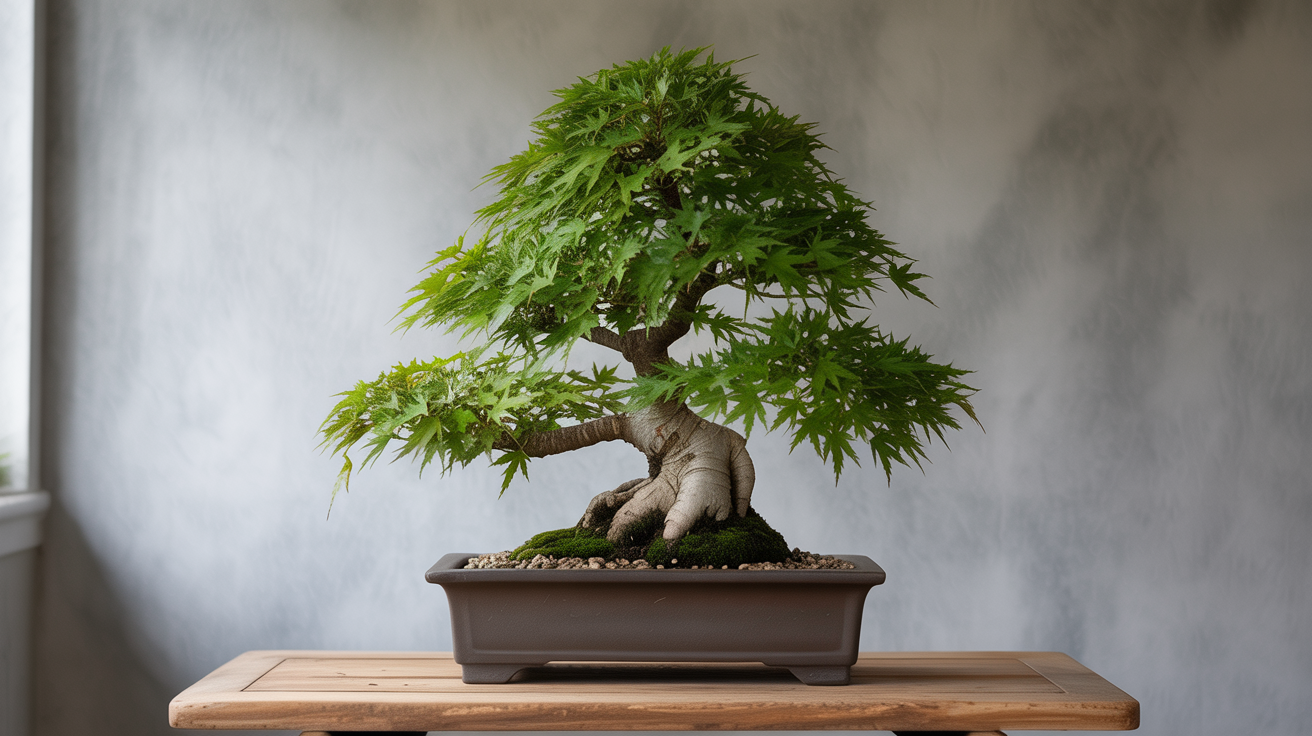
Few deciduous bonsai draw as much attention as maples. Their autumn color can stop a visitor mid-sentence, and the fine branching structure that develops over years is part of what makes them so satisfying to grow. Both Japanese maple (Acer palmatum) and trident maple (Acer buergerianum) appear on nearly every beginner recommendation list, but the two trees have different temperaments, and some care points that work for one can stress the other.
This guide covers species differences, what to expect through each season, and the mistakes that most often set back new growers.
Japanese Maple vs. Trident Maple: Picking the Right One
The choice between these two depends largely on your climate and how much margin for error you want.
Japanese maple has finely divided, deeply lobed leaves that reduce well with consistent pruning. The autumn color ranges from gold to scarlet depending on cultivar. On the downside, Japanese maples are somewhat sensitive to late spring frosts, harsh afternoon sun in summer, and strong drying winds. They prefer a sheltered spot outdoors with morning sun and partial afternoon shade. In hot climates, full sun all day can scorch the leaf edges even when the tree is well-watered.
Trident maple tends to be more forgiving. The three-lobed leaves are larger than Japanese maple foliage but still reduce to a manageable size, and the tree tolerates more heat and sun. The bark develops attractive orange and gray flaking as the tree ages, which is one reason experienced growers favor it for neagari and informal upright styles. Trident maples also recover faster from repotting and bounce back more readily from accidental dry-outs than Japanese maples do.
For a first tree, trident maple gives you slightly more breathing room. If you live somewhere with hot summers, it is the more practical starting point.
Seasonal Care Through the Year
Maples are deciduous, which means their calendar looks very different from a pine or juniper.
Spring is the most active growth period. Buds swell quickly, and new shoots can extend several internodes in a few weeks. This is also when the tree is most demanding of water. Check soil moisture daily once temperatures rise above 10°C (50°F), and do not let the soil dry out completely during the initial leaf-out. Light fertilizing with a balanced fertilizer begins once the new leaves have hardened off; feeding too early, while leaves are still soft and translucent, can cause tip burn.
Summer is the time to manage vigor rather than encourage it. You want to pinch or cut back long shoots to maintain ramification, but stop any heavy pruning by midsummer so the tree has time to harden the new growth before autumn. Water needs peak during hot weather. Trident maples handle afternoon heat better than Japanese maples; if your Japanese maple sits in full western sun and the leaf margins are browning, move it to a spot with afternoon shade.
Autumn brings the color display and the start of slowdown. Reduce fertilizer nitrogen by late summer and switch to a lower-nitrogen mix in early autumn so the tree hardens off properly before cold arrives. After leaves drop, you can do structural pruning while the branch structure is fully visible. This is one of the best times to assess the tree's silhouette and decide which crossing or redundant branches to remove.
Winter dormancy is not optional. This is the point most beginners mishandle. Both Japanese and trident maples need a period of cold to rest properly. A consistent temperature between roughly 0°C and 5°C (32°F and 41°F) for at least six to eight weeks is the general guideline. An unheated garage, shed, or cold frame that stays frost-free works well in most climates. The tree does not need light during this period because it has no leaves. Water sparingly, just enough to prevent the roots from desiccating completely.
Watering Frequency and Soil
Maples like soil that stays evenly moist but never waterlogged. A fast-draining bonsai mix with akadama as the main component, combined with pumice or perlite for aeration, suits both species. Pure organic potting soil holds too much moisture and increases the risk of root rot.
How often you water depends on the pot size, season, and local conditions, not a fixed number of days. A small pot in summer heat may need watering twice daily. A large pot in early spring may go two or three days between waterings. Get in the habit of pressing a finger an inch into the soil or lifting the pot to judge its weight; these physical checks are far more reliable than any schedule.
Maples do not like to sit in water. If your pot has a humidity tray, make sure the pot is raised above any standing water with feet or stones.
The Biggest Mistake: Keeping Maples Indoors
A recurring problem for beginners is treating maples like tropical bonsai and keeping them indoors year-round. This is the single most common reason maples decline. Both species are outdoor trees in every season, including winter dormancy. They need the temperature cues that drive dormancy, and they need outdoor light intensity in the growing season. Indoor light, even next to a sunny window, is too dim and lacks the UV spectrum that supports healthy growth over time.
The only time a maple should be indoors is during brief display periods of a day or two, or if you are protecting it from an unexpected hard freeze that would be damaging for the specific pot size. Consistent indoor living leads to weak growth, pest problems, and eventually a tree that cannot push healthy buds the following spring.
If you are unsure whether your tree is a true outdoor species, see the guide to indoor versus outdoor bonsai before purchasing.
Pruning and Ramification
Maples produce ramification through repeated back-budding when shoots are cut before they become too long. The general rhythm is to let a shoot extend two to four pairs of leaves, then cut back to one or two pairs. Doing this consistently over several growing seasons builds the fine twig structure that distinguishes a mature-looking maple bonsai from a leggy one.
Japanese maples also respond to full defoliation in early summer, a technique that encourages back-budding and smaller leaf size on an otherwise healthy, vigorous tree. This is an advanced step that should not be attempted in the first year with a new tree or on any tree that is recovering from repotting, a pest problem, or another stressor. When in doubt, skip it that season.
Internal links worth reading before you buy: choosing a beginner-friendly tree has a side-by-side look at how maples compare to other popular species. Once your maple has grown for a couple of years, repotting timing and technique becomes the next major skill to develop.
Frequently Asked Questions
Can I keep a Japanese maple bonsai on my apartment balcony? Yes, provided the balcony gets enough light and is not so exposed that it creates wind desiccation problems. The main concern is winter dormancy. If temperatures on your balcony do not drop low enough for long enough, you will need to move the tree to an unheated space for its rest period.
Why are my maple leaves getting brown edges in summer? Scorched leaf margins on a maple usually point to one of three things: soil drying out completely between waterings, afternoon sun that is too intense for Japanese maple in particular, or a wind exposure that is pulling moisture from the leaves faster than the roots can replace it. Check all three before assuming a pest or disease problem.
How do I know when my maple needs repotting? Look at root growth in early spring before buds break. If the roots have formed a dense mat around the perimeter of the pot or are beginning to lift the soil in the center, the tree is ready for root pruning and a fresh soil mix. Young maples in development may need repotting every one to two years; established trees can go three to five years depending on pot size.
Should I wire my maple's branches? Wiring maples is effective but carries more risk of scarring than wiring a juniper, because maple bark is thinner and marks easily. If you wire during the growing season, check the wire every few weeks and remove it before it starts to cut into the bark. Many growers prefer to wire maples in late autumn or winter when the structure is visible and the bark is slightly less vulnerable.
My maple dropped all its leaves in midsummer. Is it dead? Not necessarily. Premature leaf drop in summer can follow a severe water stress event, a sudden move to direct sun, or a root disturbance. Check the branches: scratch a small area of bark with a fingernail. Green underneath means living tissue. Place the tree in a shaded, sheltered spot, water carefully, and wait. New buds may push within a few weeks if the root system is intact.